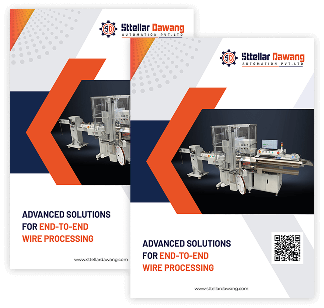
Subscribe To Our News letter
Sign up today Writing copy is time-consuming and difficult. Headlime's artificial intelligence can take your thoughts.

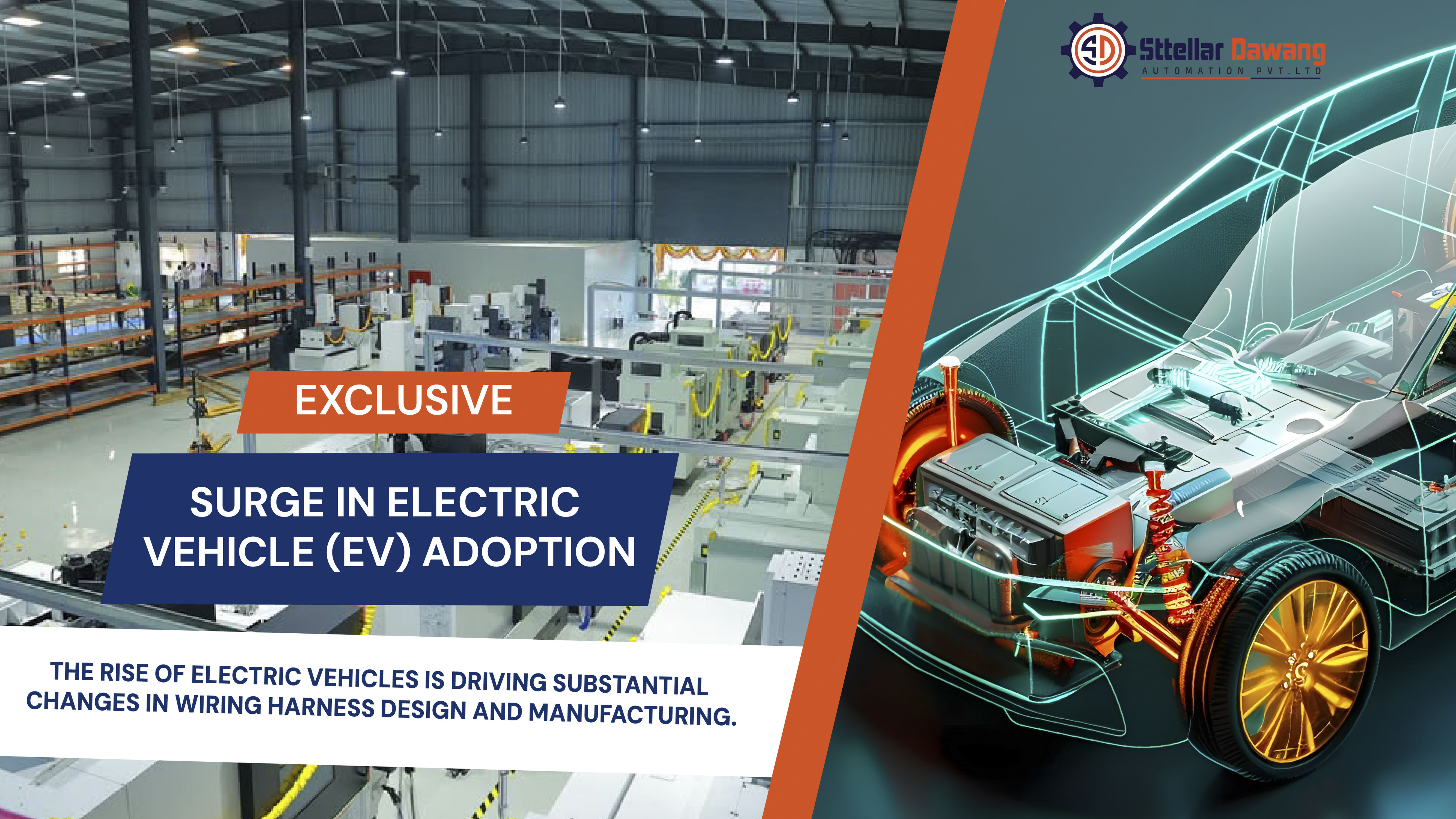
The rise of electric vehicles is driving substantial changes in wiring harness design and manufacturing. EVs require specialized high-voltage wiring systems to manage battery power and integrate with ...
Read More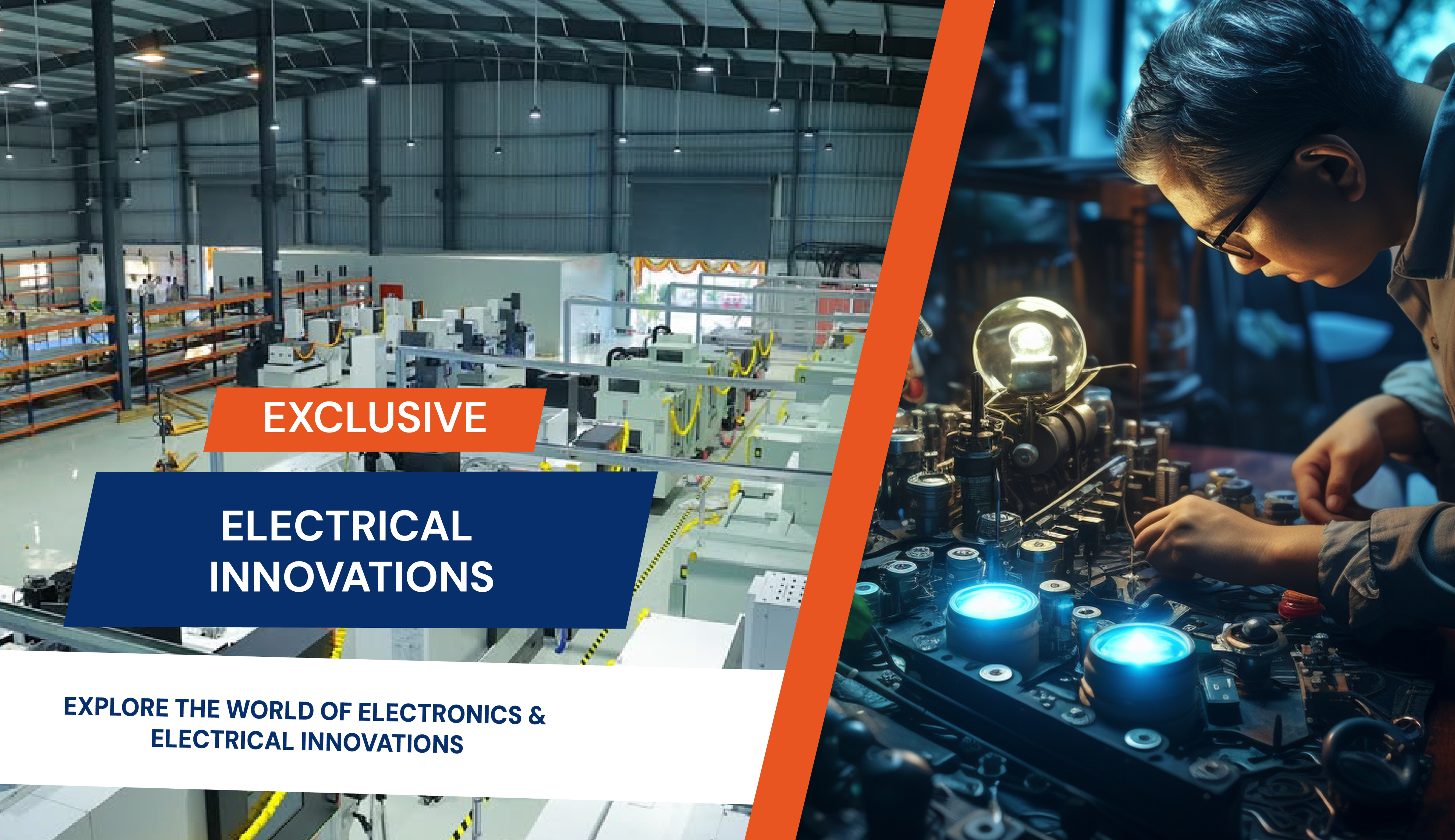
Dive deep into the evolving world of electronics and electrical engineering with industry insights, tutorials, product innovations, expert tips, and real-world projects shaping the future of technolog...
Read More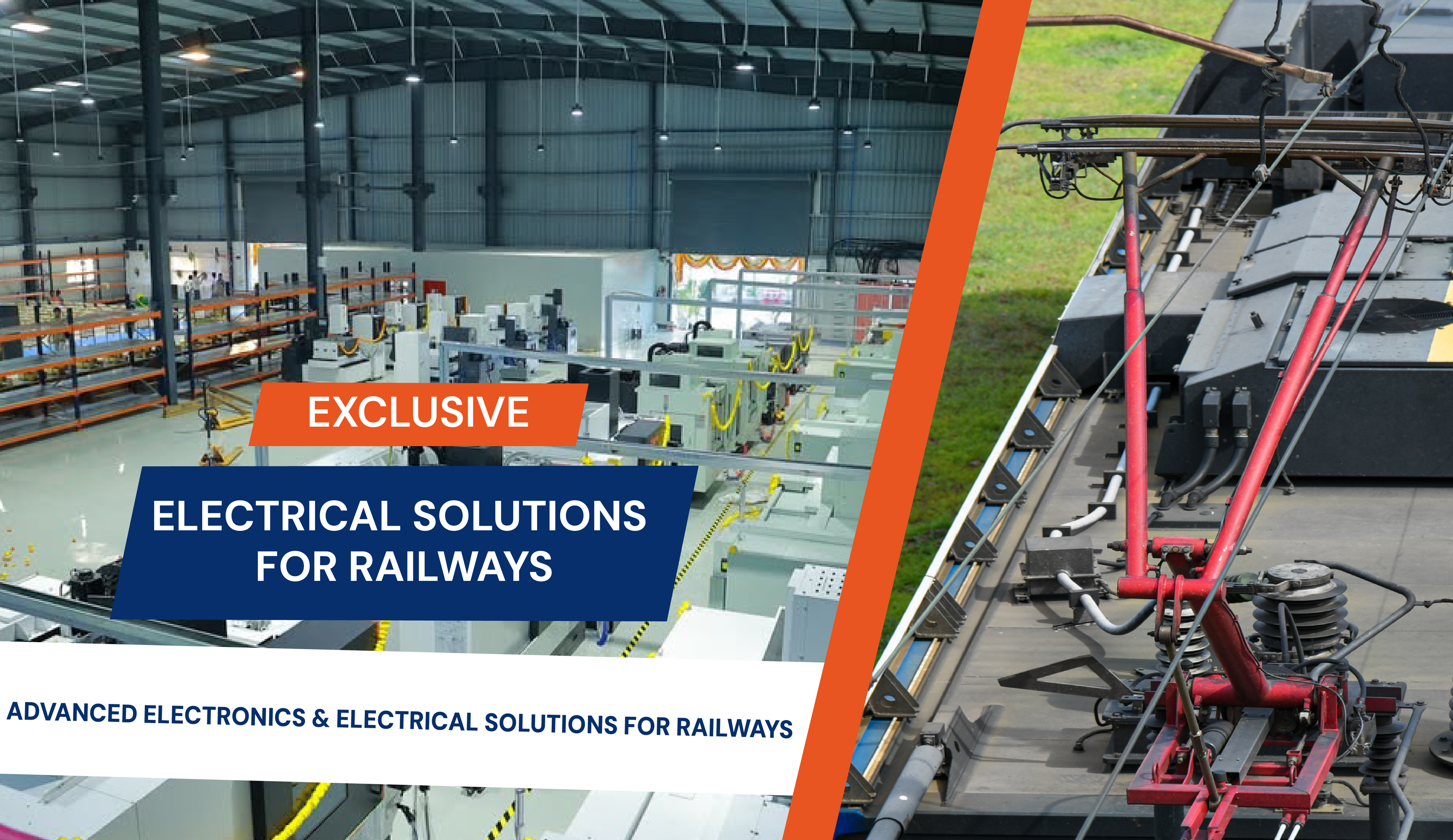
Discover how cutting-edge electronics and electrical innovations are transforming the railway industry with smarter control systems, energy-efficient traction, predictive maintenance, and IoT-enabled ...
Read More
Explore how advanced electronics and electrical engineering power aerospace innovations, from avionics and energy systems to intelligent control, embedded systems, and space exploration technologies.
Read More
Explore how advanced electronics and electrical engineering are transforming medical technology, from imaging and patient monitoring to wearables, robotics, power safety, and AI-driven healthcare inno...
Read More
Discover how advanced electronics and electrical engineering are transforming solar and renewable energy systems, from photovoltaics and energy storage to smart grids and hybrid renewable technologies...
Read More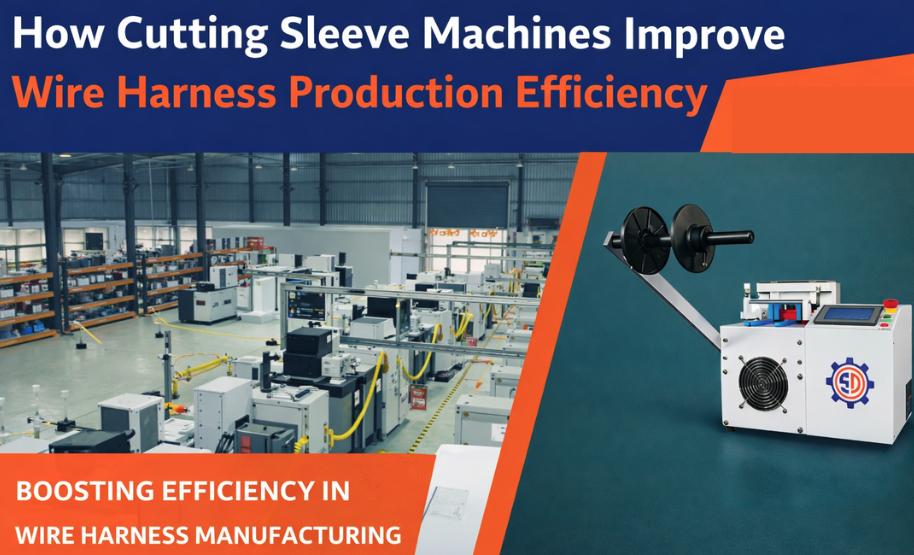
In the rapidly evolving wire harness manufacturing industry, efficiency, precision, and consistency are essential for maintaining high production standards. One of the most important processes in wire...
Read More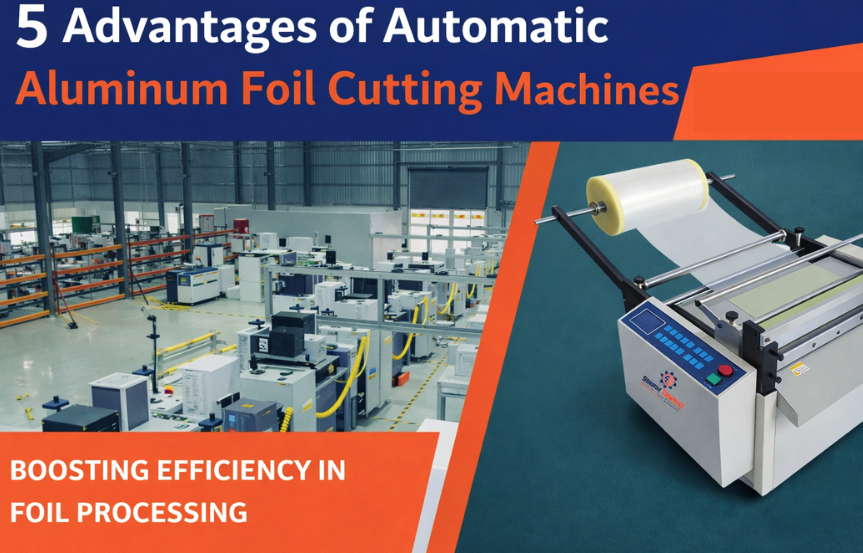
In modern manufacturing industries such as wire harness production and electronics assembly, aluminum foil is essential for insulation and shielding. Achieving consistent quality requires advanced aut...
Read More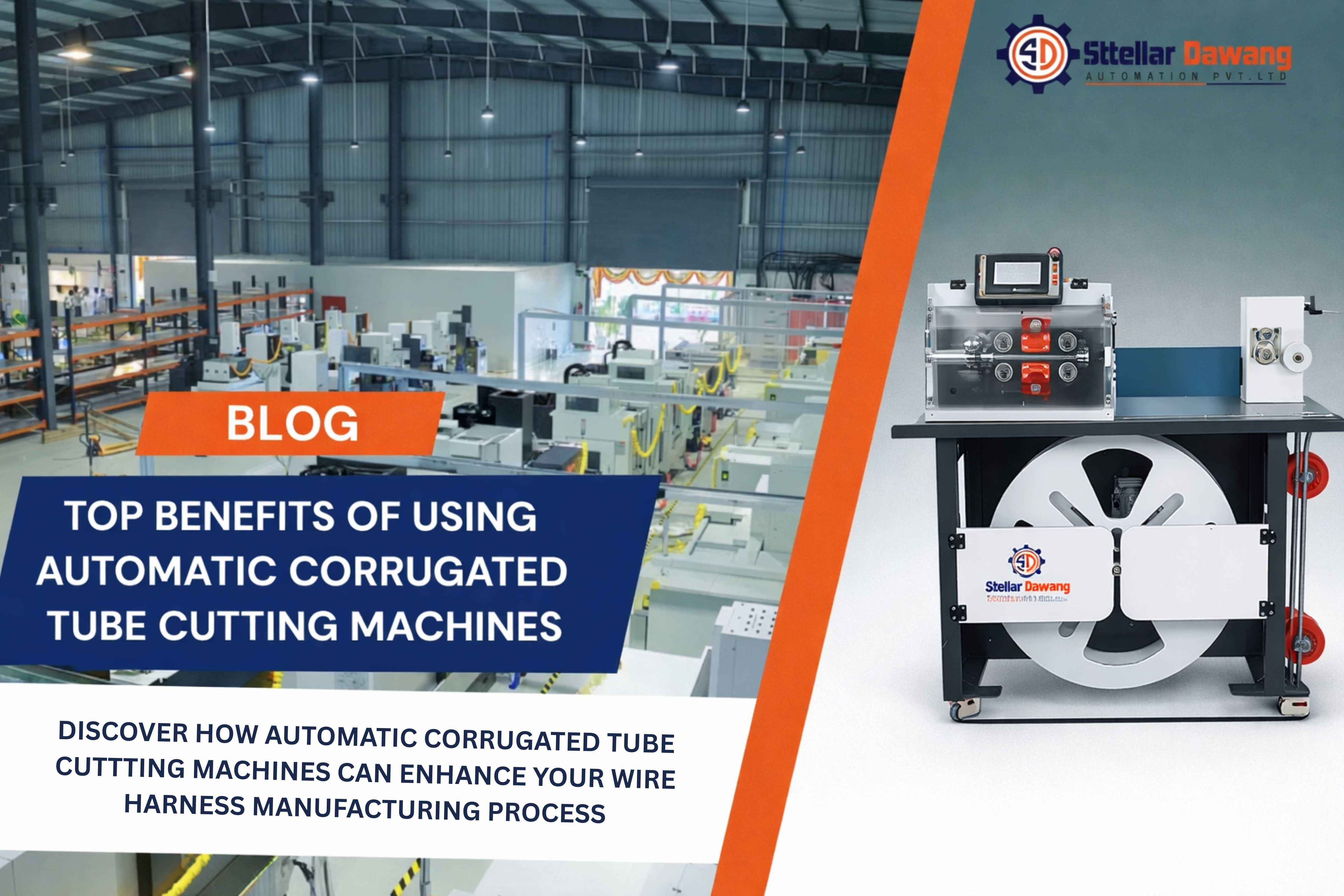
Corrugated tubes are essential for protecting wire harnesses in automotive and aerospace industries. To maintain high-quality protection and routing, manufacturers utilize Automatic Corrugated Tube Cu...
Read More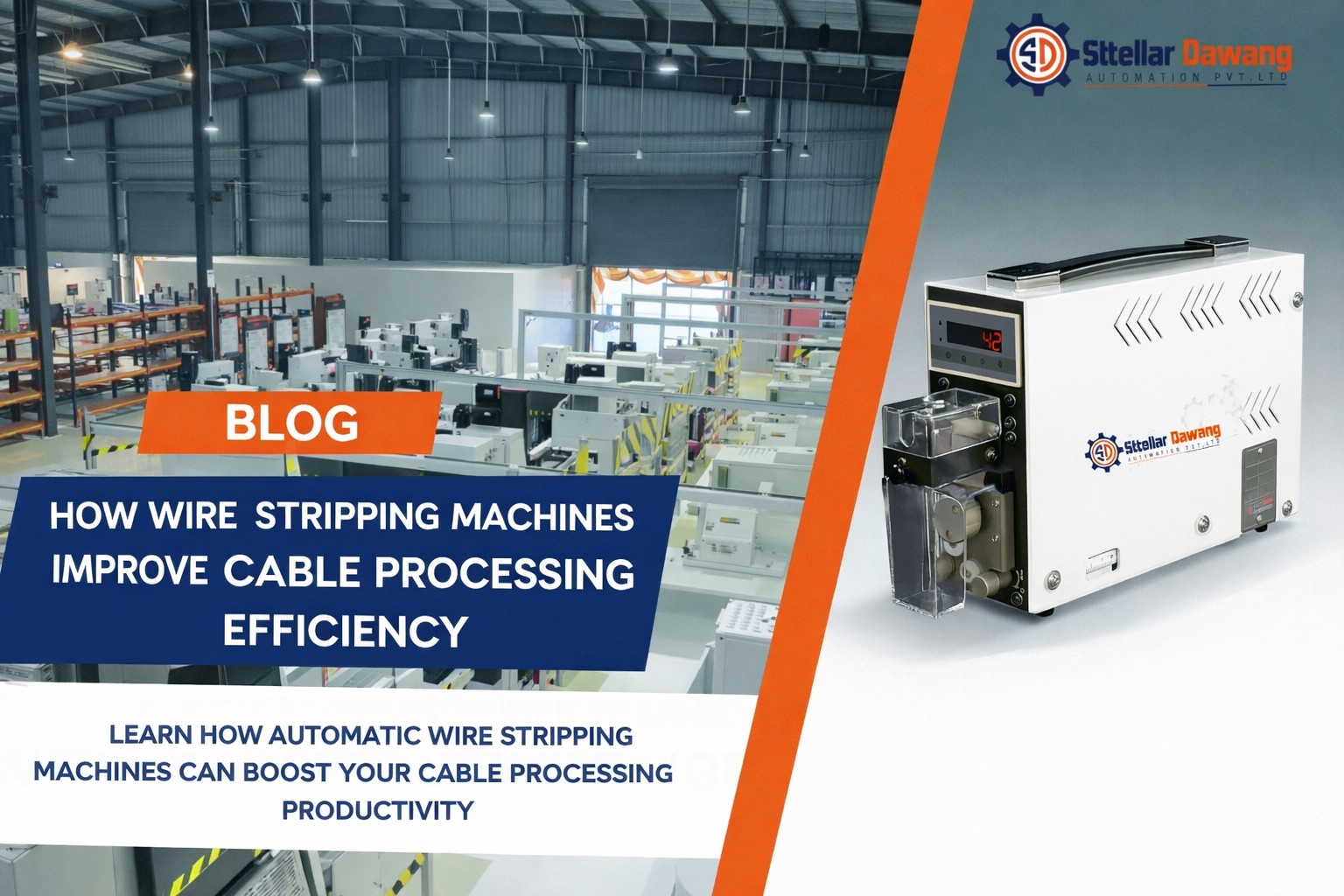
In industries like automotive and telecommunications, precise cable processing is vital for reliable electrical connections. Advanced Wire Stripping Machines eliminate the inconsistencies of manual la...
Read More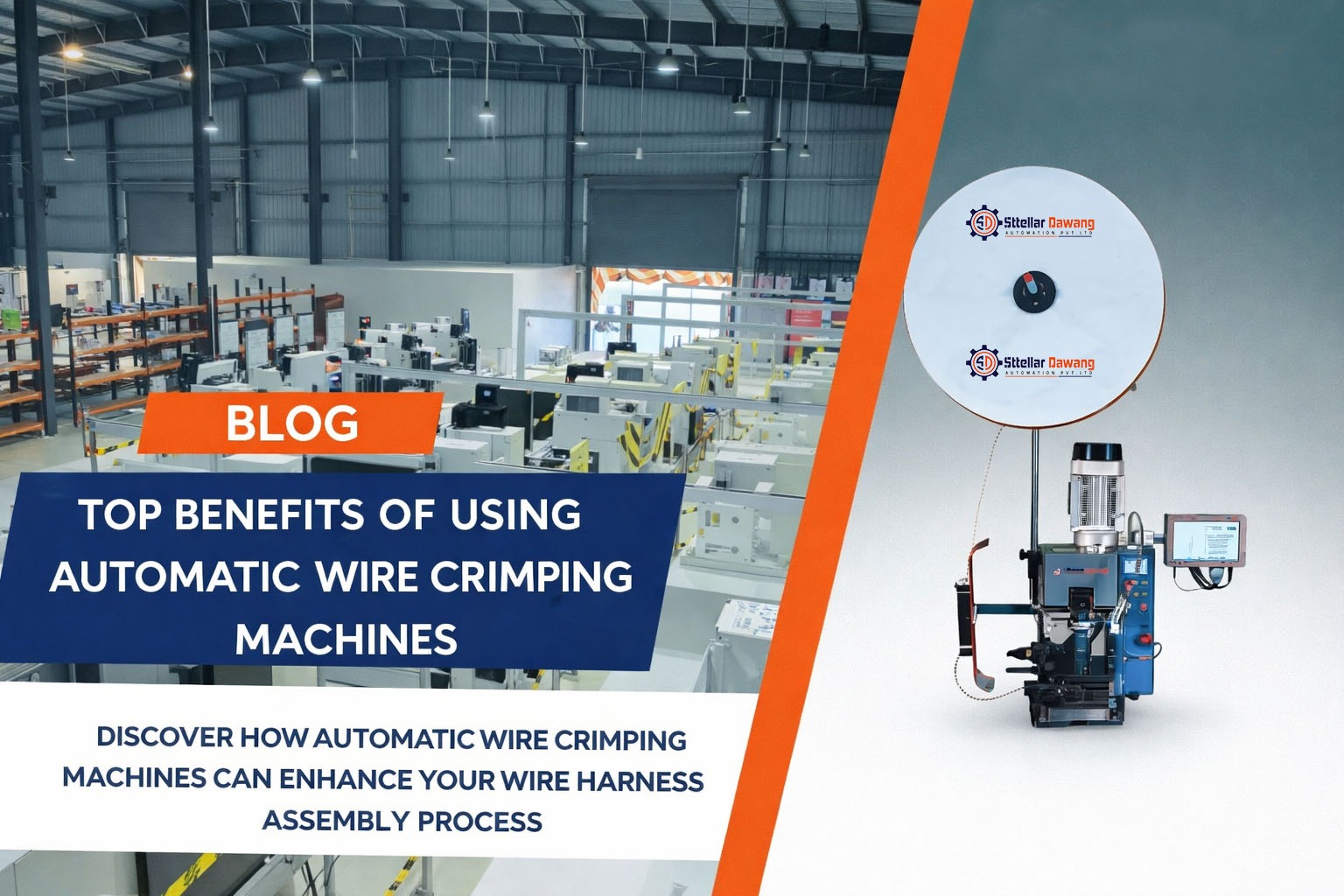
In wire harness manufacturing, the transition from manual to automatic crimping is essential for safety and performance. Modern Automatic Wire Crimping Machines, supported by Dual Channel Crimp Force ...
Read More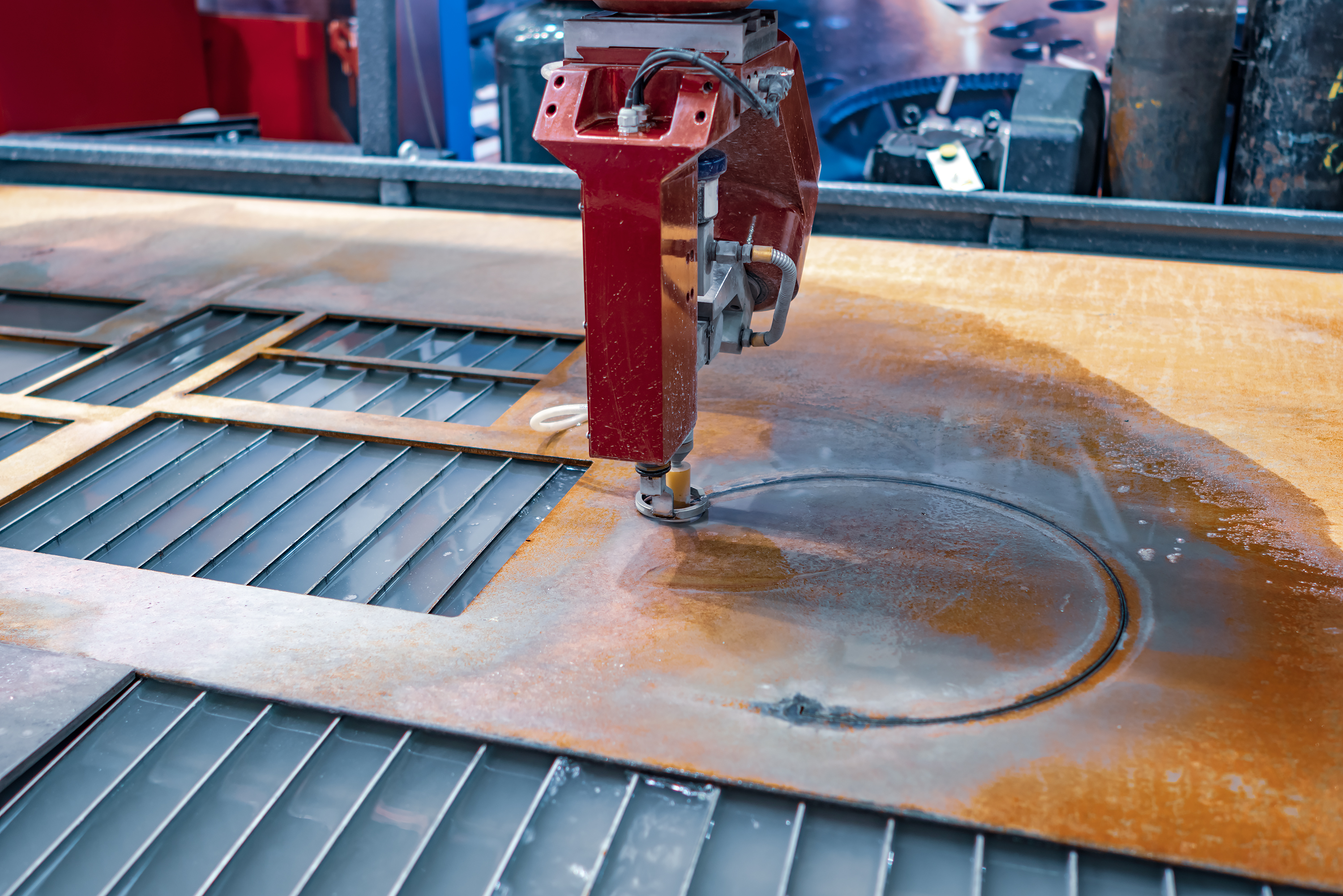
In modern industrial manufacturing, precision and efficiency in cutting operations directly impact product quality and production throughput. A Hot Knife Cutting Machine is an essential piece of equip...
Read More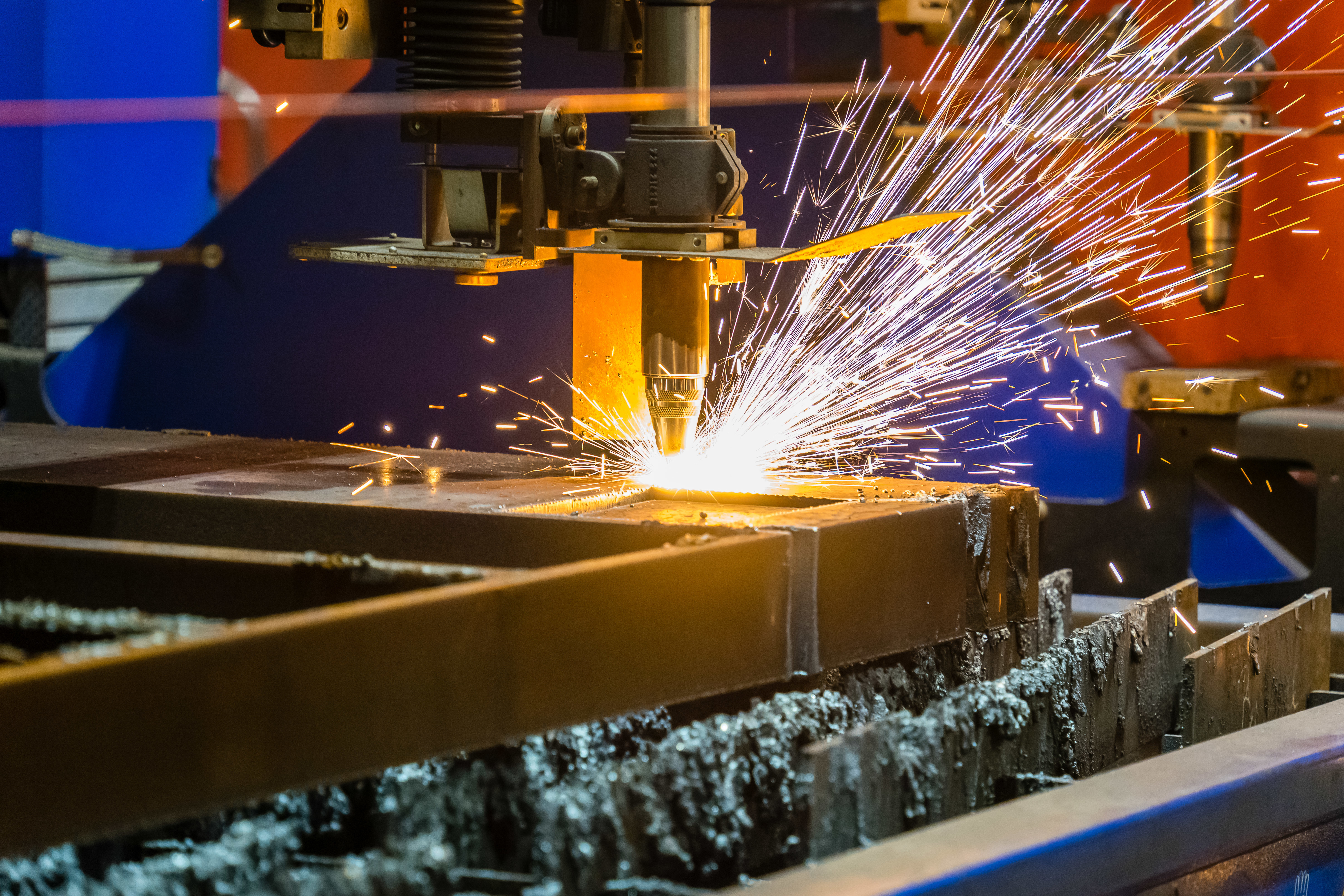
Precision and speed are the twin pillars of competitive manufacturing. For companies processing wires, cables, webbing, and thermoplastic components at scale, an Automatic Hot Knife Cutting Machine re...
Read More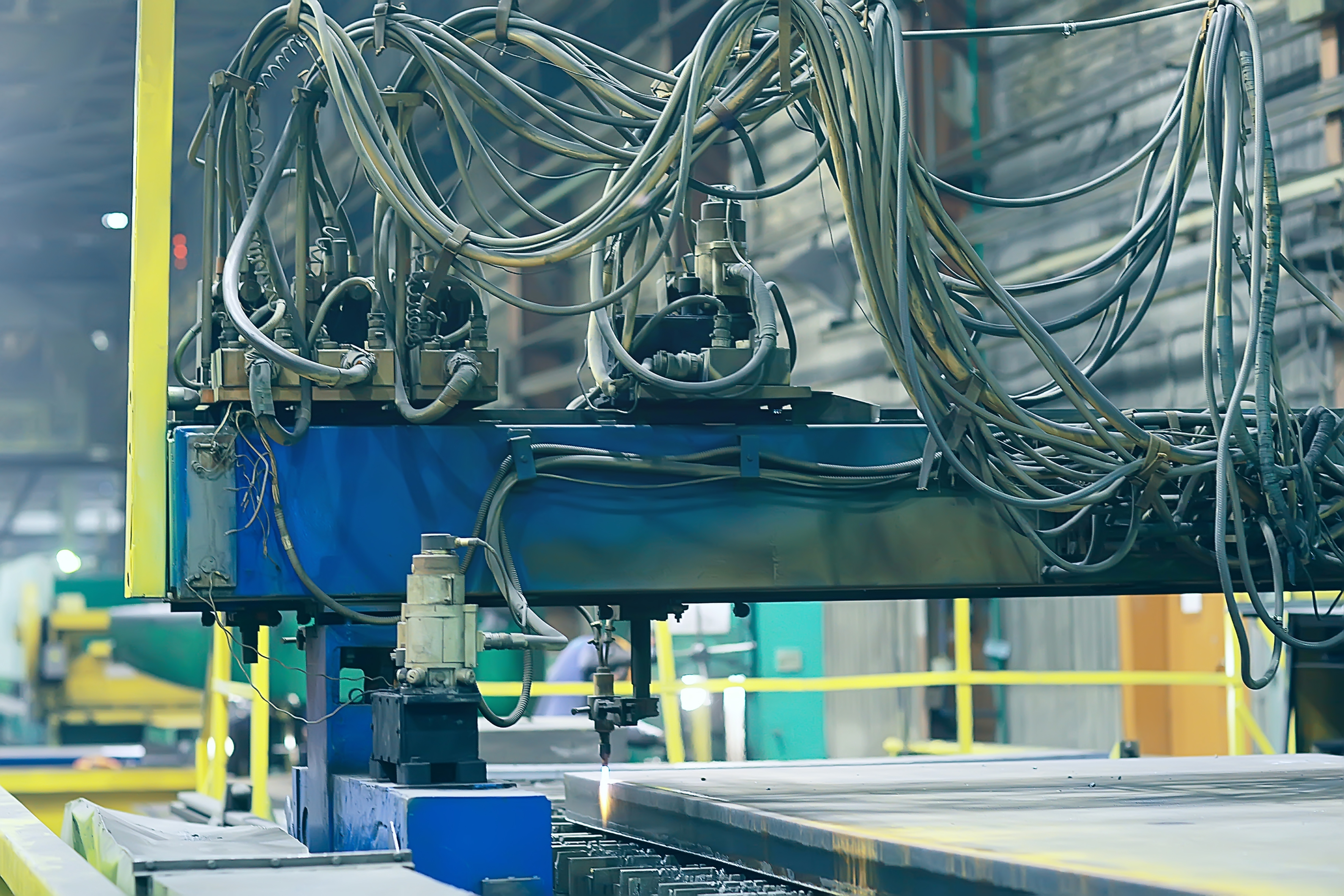
Wire stripping is a foundational process in every wire harness, cable assembly, and electrical manufacturing operation. When performed manually, it is slow, inconsistent, and prone to conductor damage...
Read More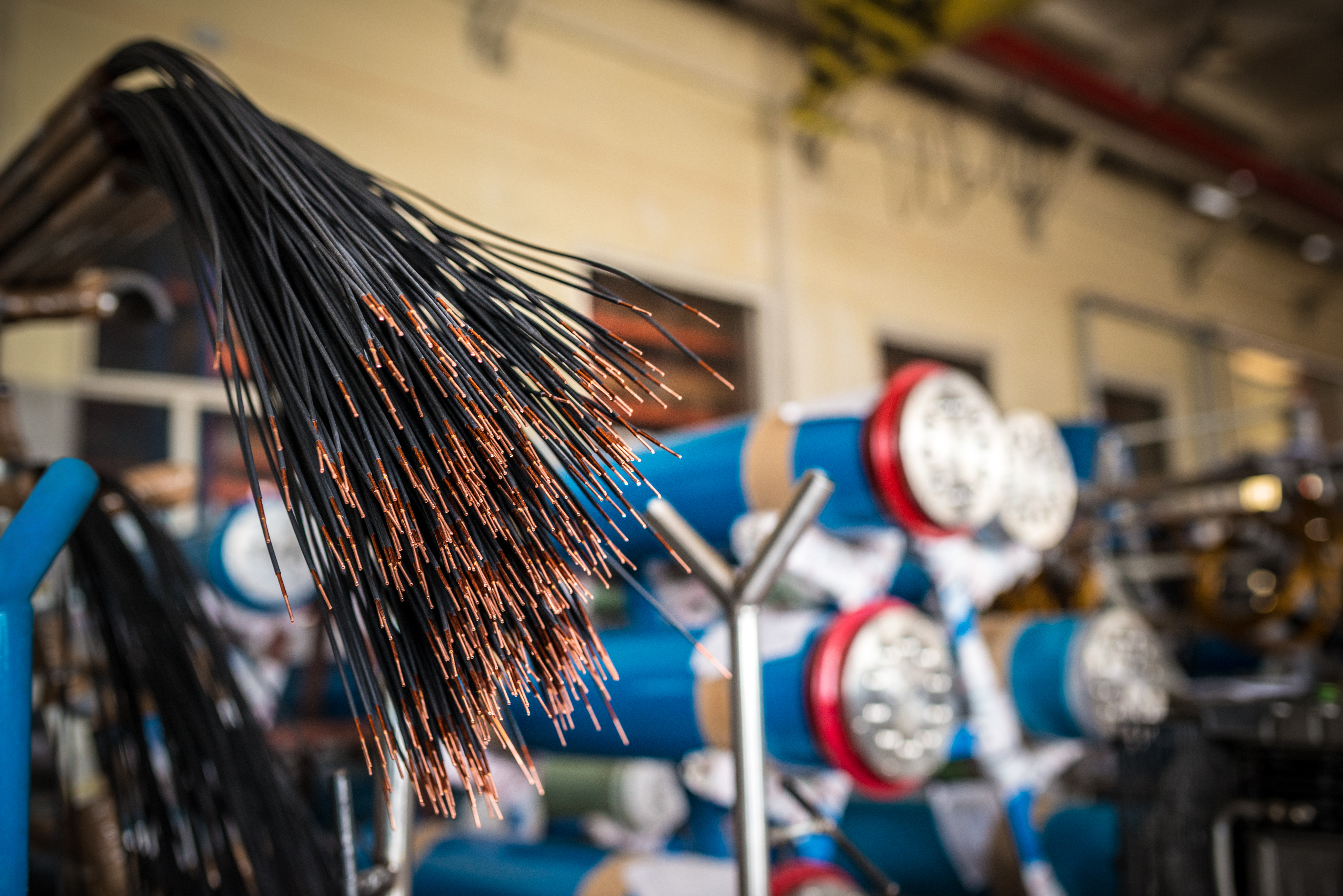
Cable Cutting and Stripping Machines are the backbone of wire harness and cable assembly manufacturing. These versatile machines automate two of the most fundamental wire preparation processes — cutti...
Read More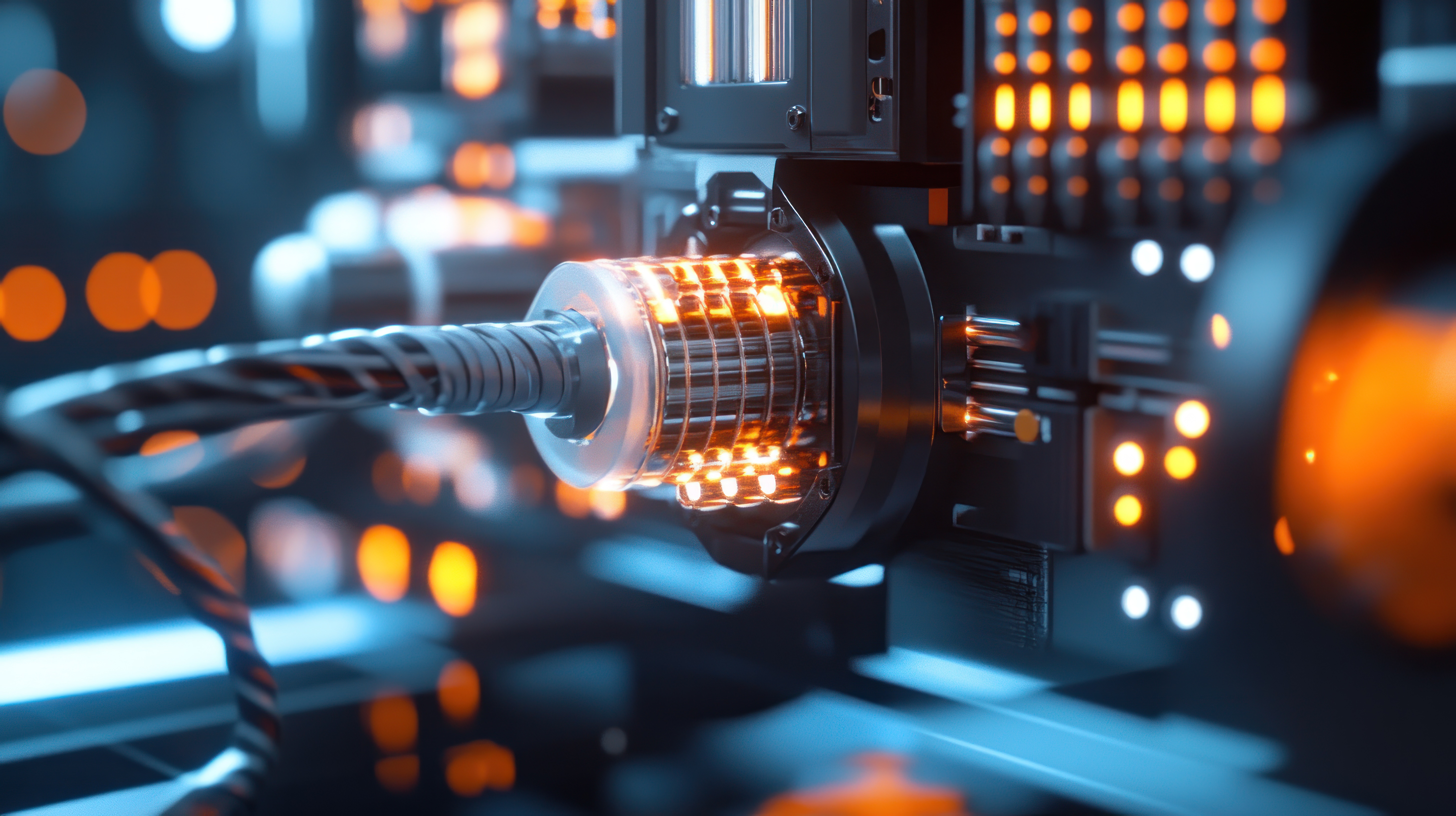
The wire processing industry is under constant pressure to produce more, faster, with fewer errors and lower costs. A Fully Automatic Wire Processing Machine addresses all of these demands simultaneou...
Read More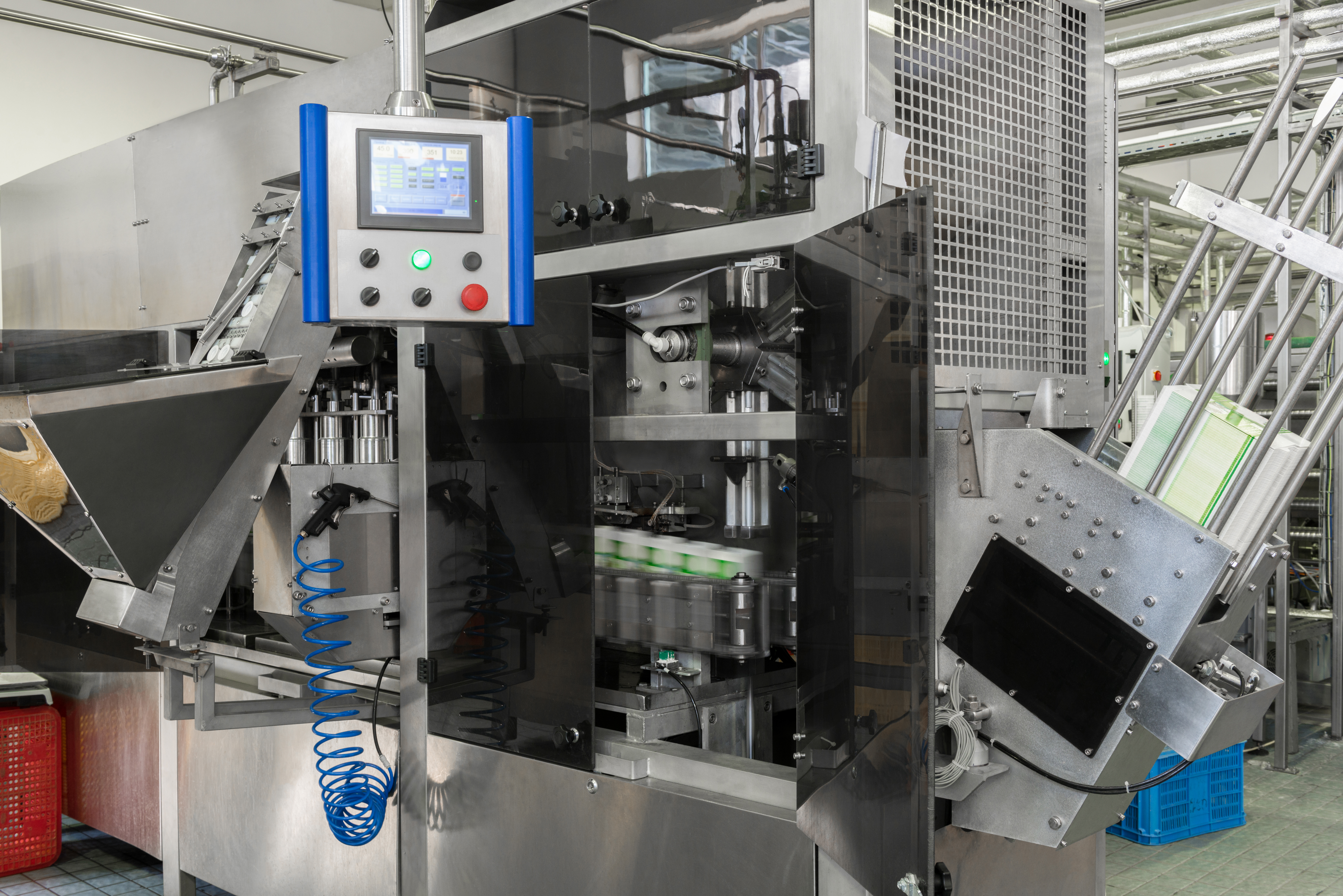
Vertical Injection Moulding Machines occupy a unique and indispensable niche in the electrical and wire processing manufacturing landscape. Unlike horizontal machines, their vertical clamping and inje...
Read More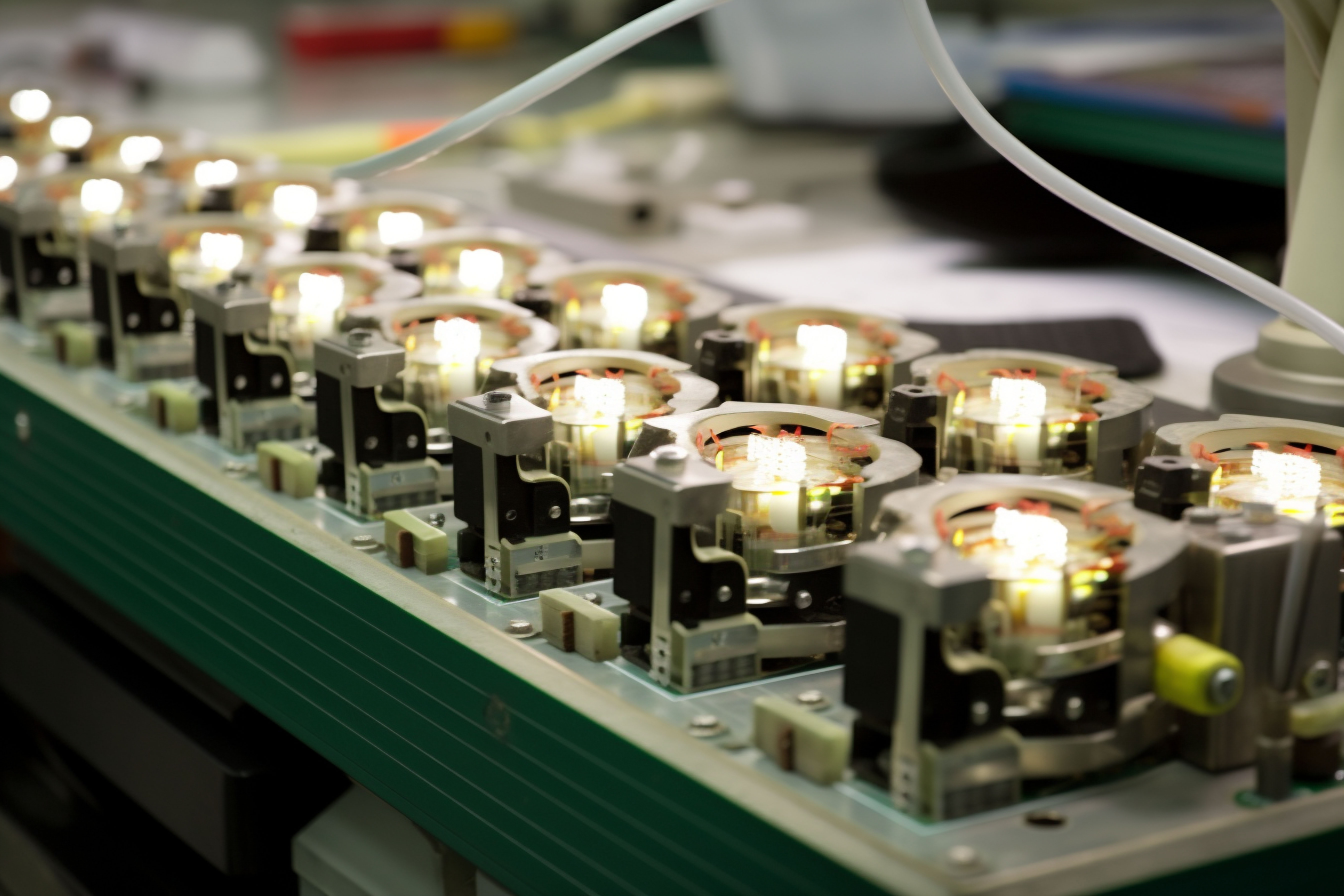
Behind every precisely moulded electrical connector, plug housing, or terminal block lies a precision-engineered plastic injection mould. The quality, dimensional accuracy, and durability of plastic i...
Read More
Wire harness assembly is a highly sequential process — each stage building on the accuracy of the previous one. Among the most critical operations is the insertion of crimped wire terminals into plast...
Read More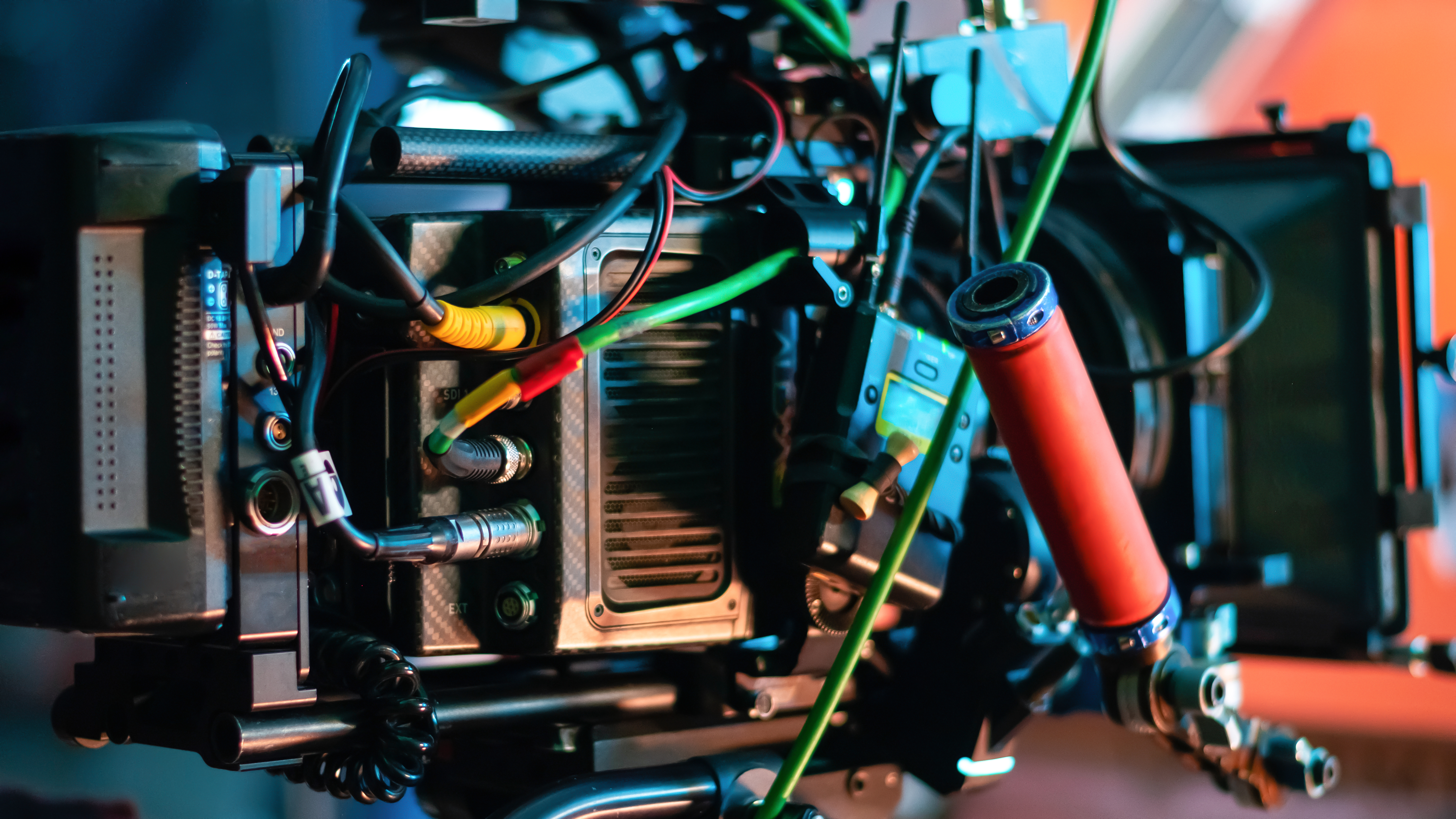
A wiring harness is only as reliable as its most problematic connection. In automotive, aerospace, industrial, and consumer electronics applications, a single open circuit, short circuit, or incorrect...
Read More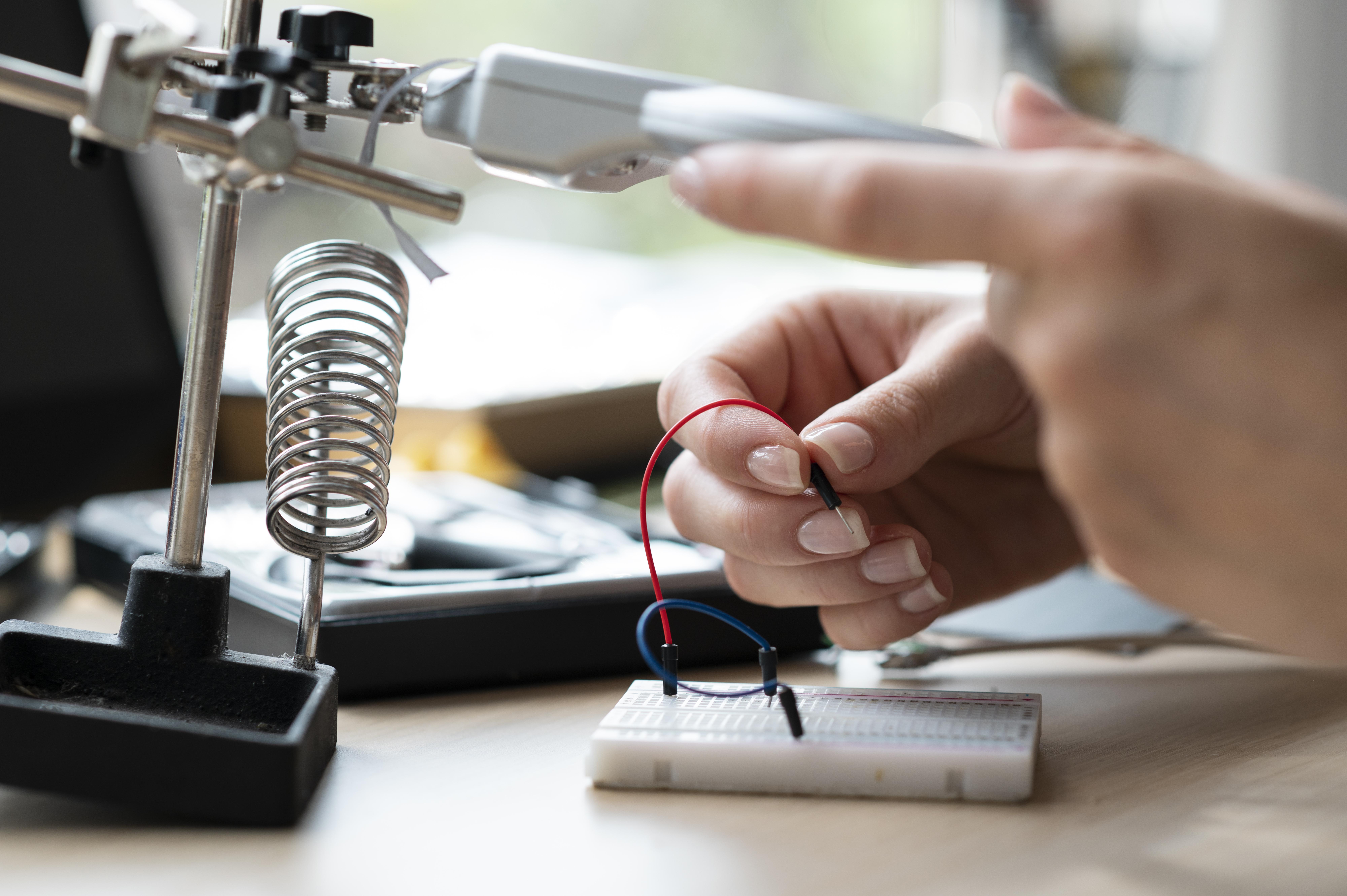
In wire and cable assembly manufacturing, the quality of solder connections directly determines the electrical reliability and mechanical strength of the finished product. Manual soldering is inconsis...
Read More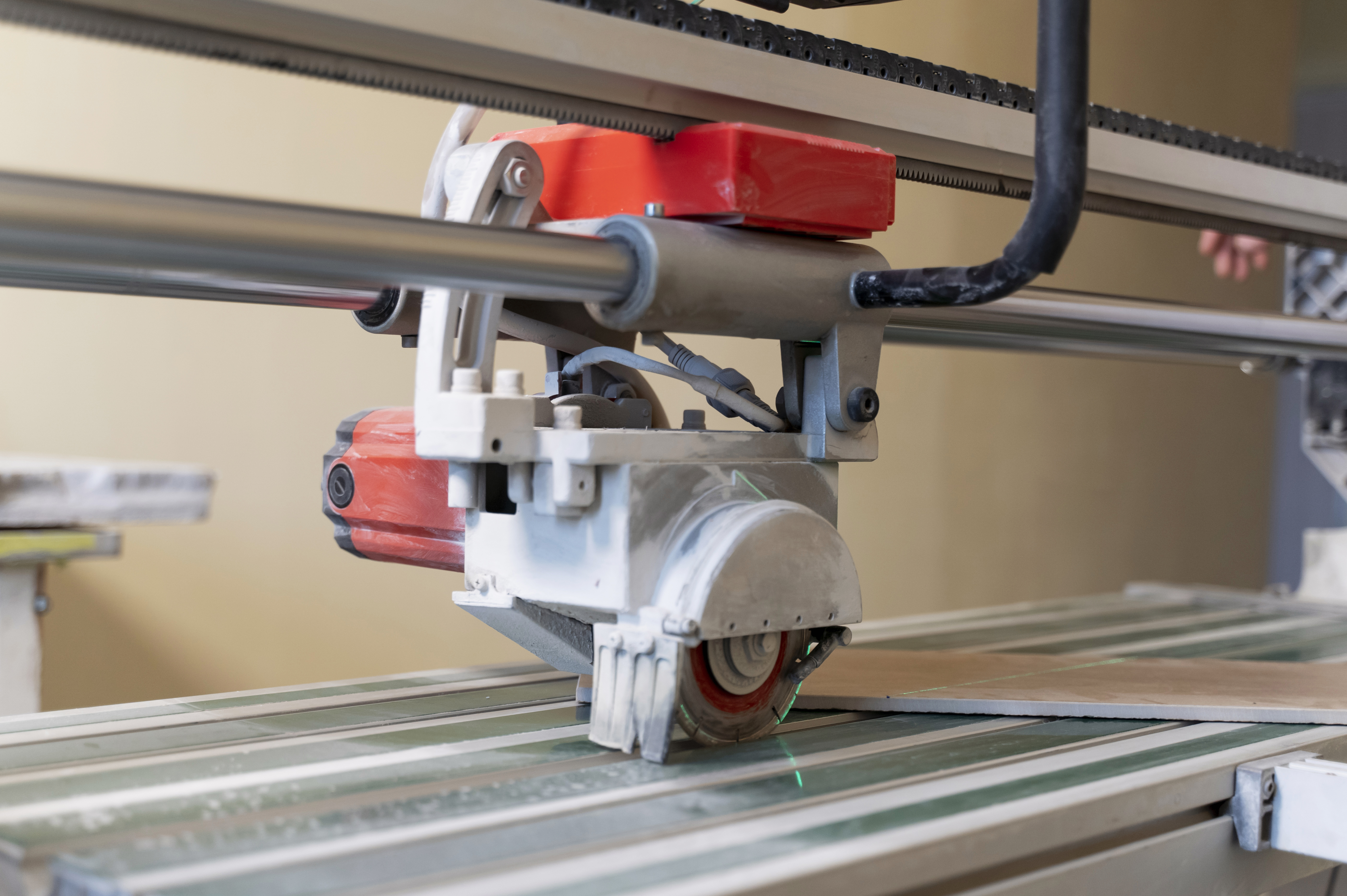
In modern manufacturing, precision is not optional — it is a fundamental requirement. Hot Knife Cutting Machines have emerged as an indispensable tool across wire, cable, textile, and plastics industr...
Read More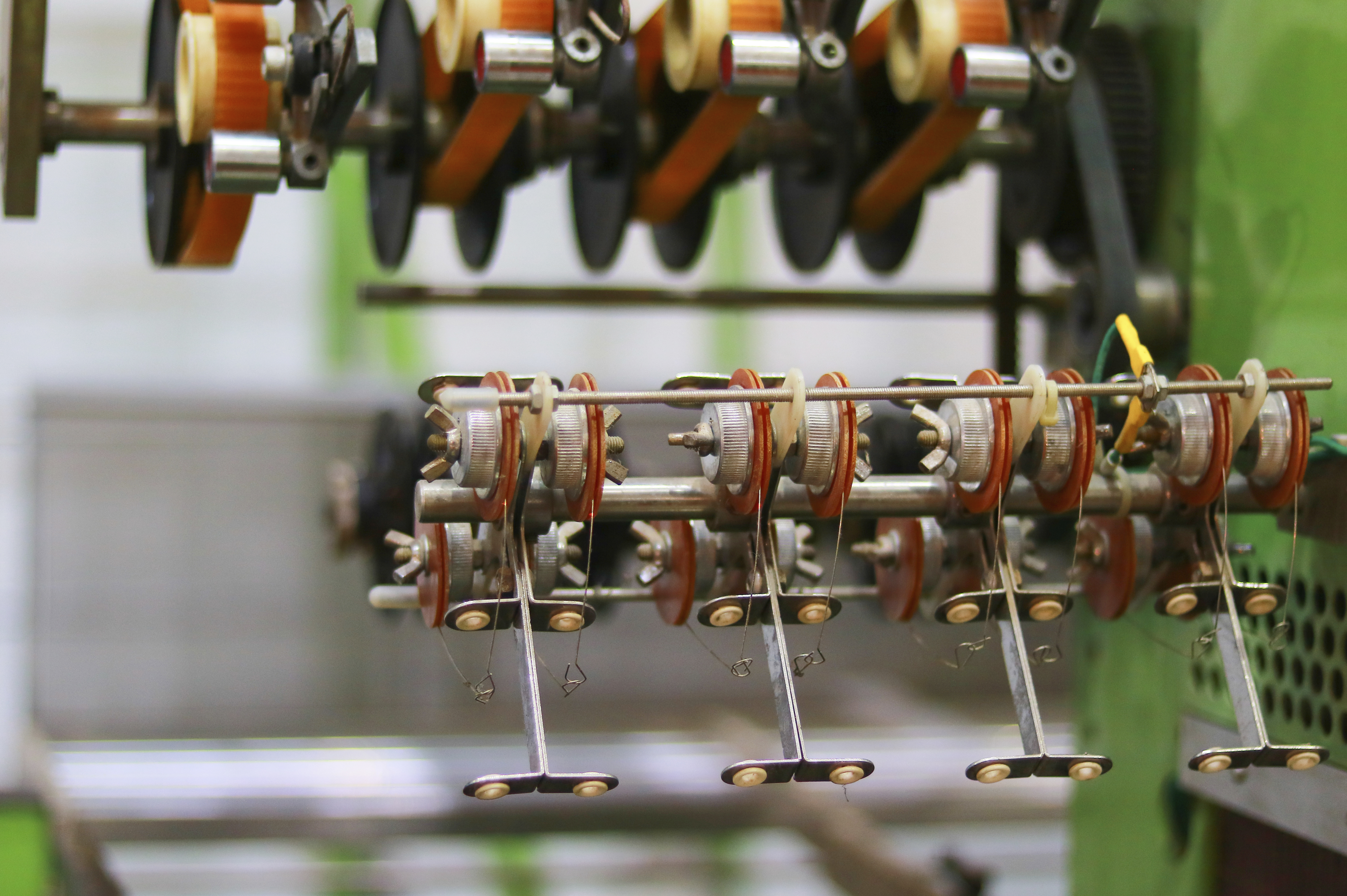
wire-stripping-machinesEfficient wire processing begins with precise insulation removal. Wire stripping machines are a cornerstone of cable assembly operations, enabling manufacturers to strip insulat...
Read More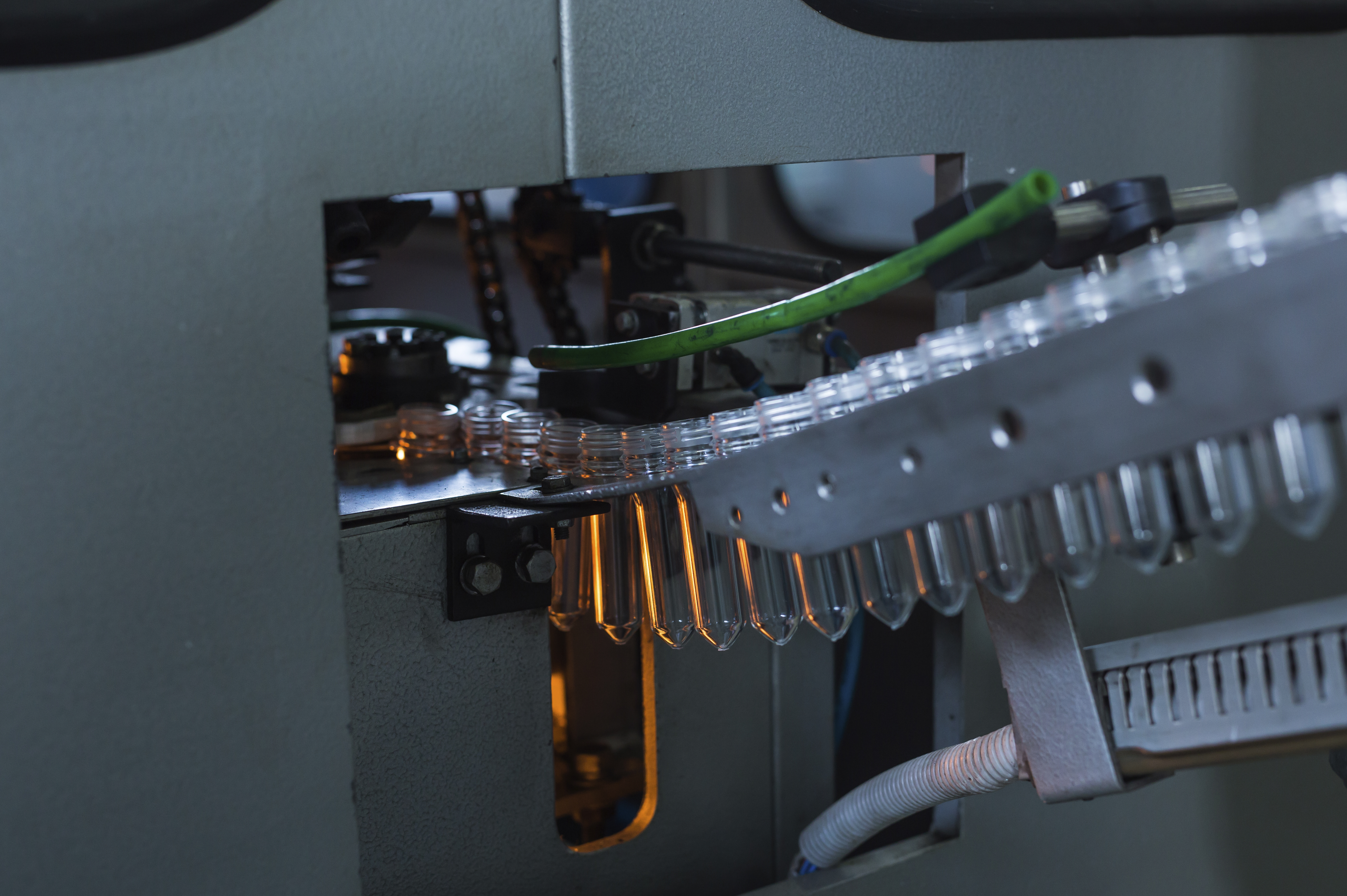
The transition from manual to automatic wire stripping is one of the most impactful upgrades a wire processing facility can make. Automatic wire stripping machines eliminate operator dependency, drama...
Read More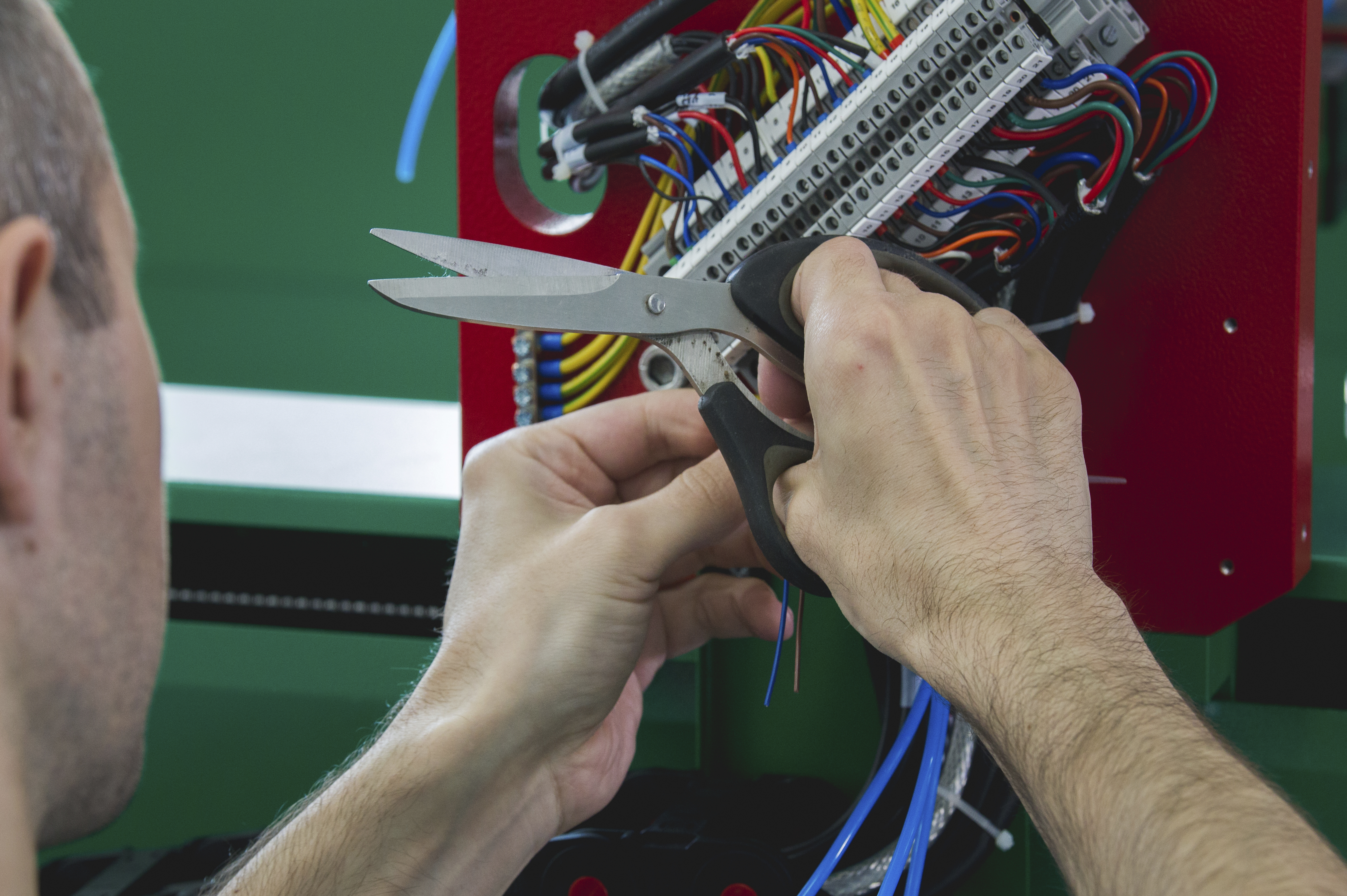
Selecting the right cable cutting and stripping machine is a critical investment decision that directly impacts production efficiency, wire quality, and overall manufacturing costs. With a wide range ...
Read More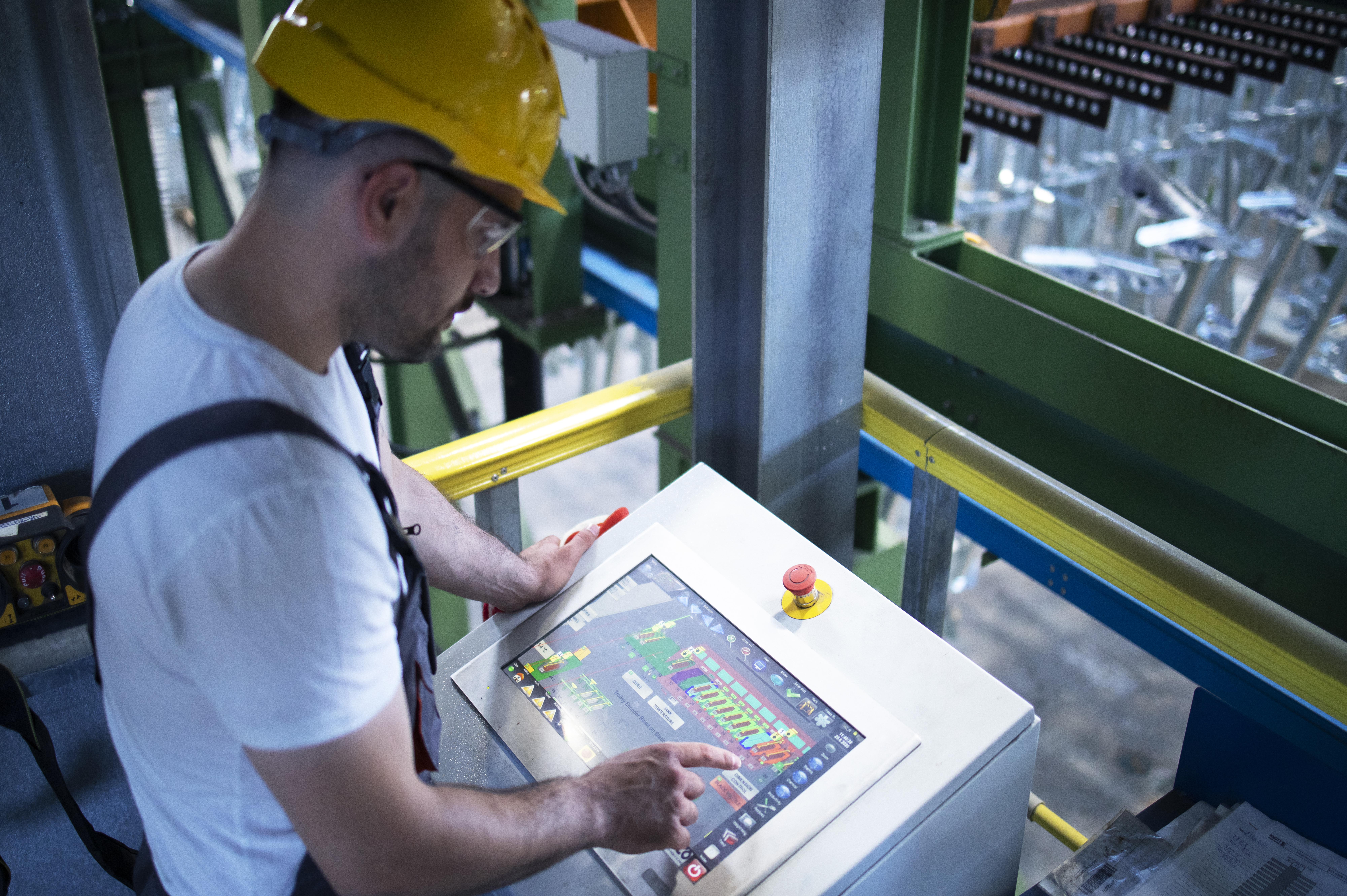
Wire processing is a labour-intensive, repetitive operation that forms the backbone of harness and cable assembly manufacturing. Every second saved per wire, and every defect prevented, has a compound...
Read More
Solder joint quality is one of the most critical determinants of electrical connection reliability. A poorly formed solder joint — whether due to insufficient heat, wrong dwell time, or flux contamina...
Read More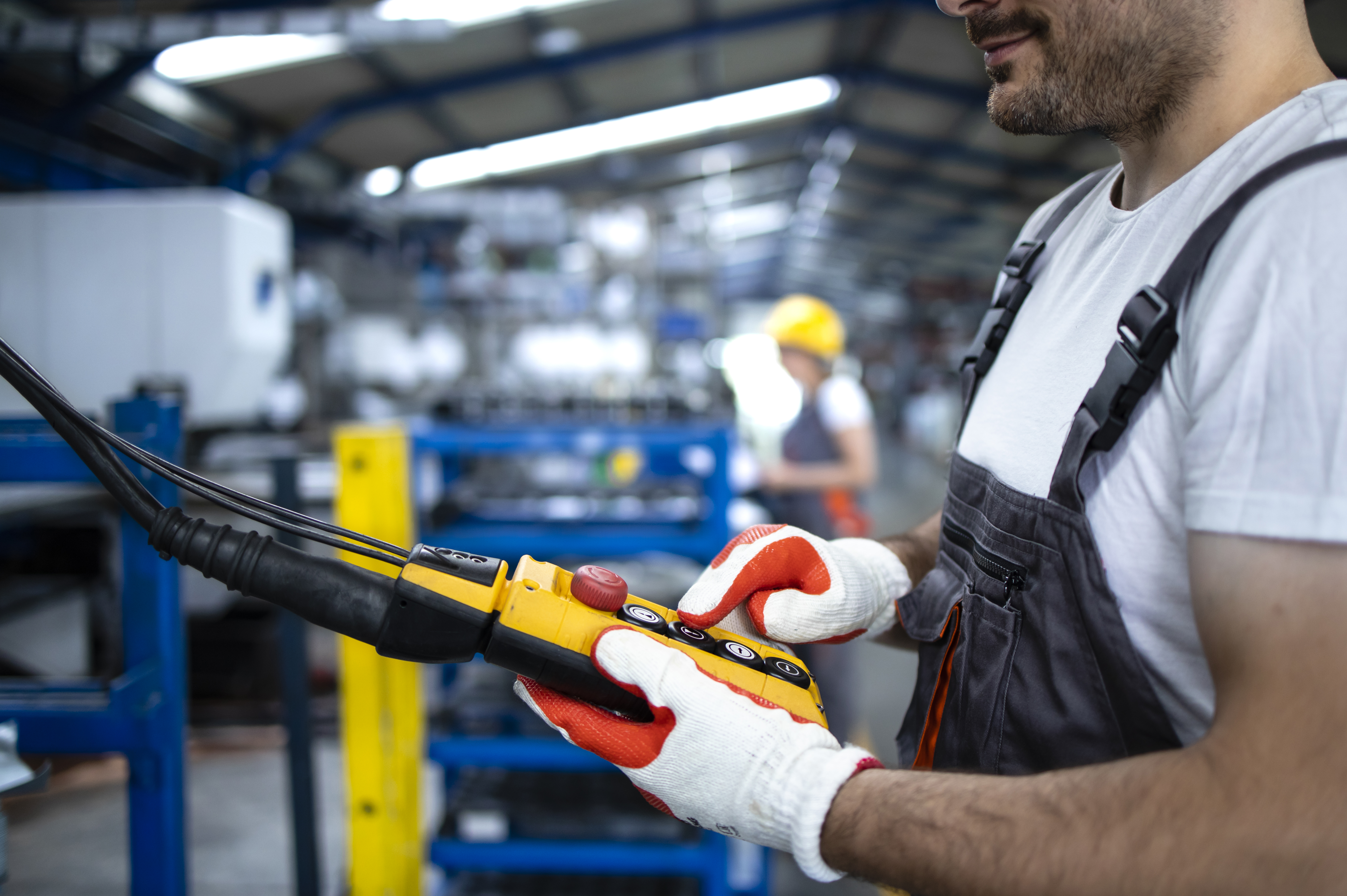
A wiring harness is the nervous system of any vehicle, machine, or electronic system. A single undetected fault — a missing connection, a miswired terminal, or inadequate insulation — can cause system...
Read More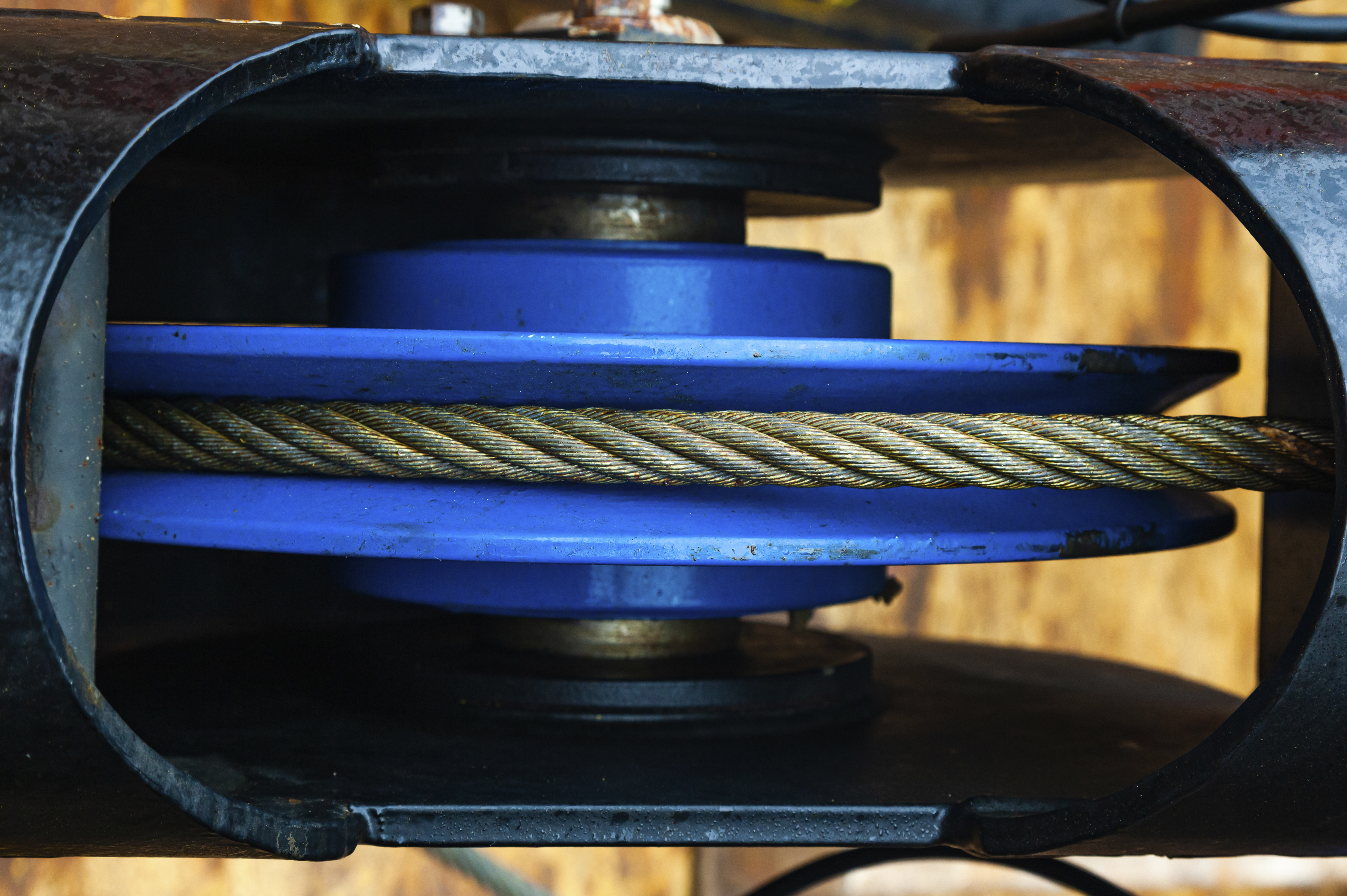
Twisted wire pairs are a fundamental building block of modern electrical and data systems. By twisting two wires together at a controlled pitch, manufacturers achieve electromagnetic interference (EMI...
Read More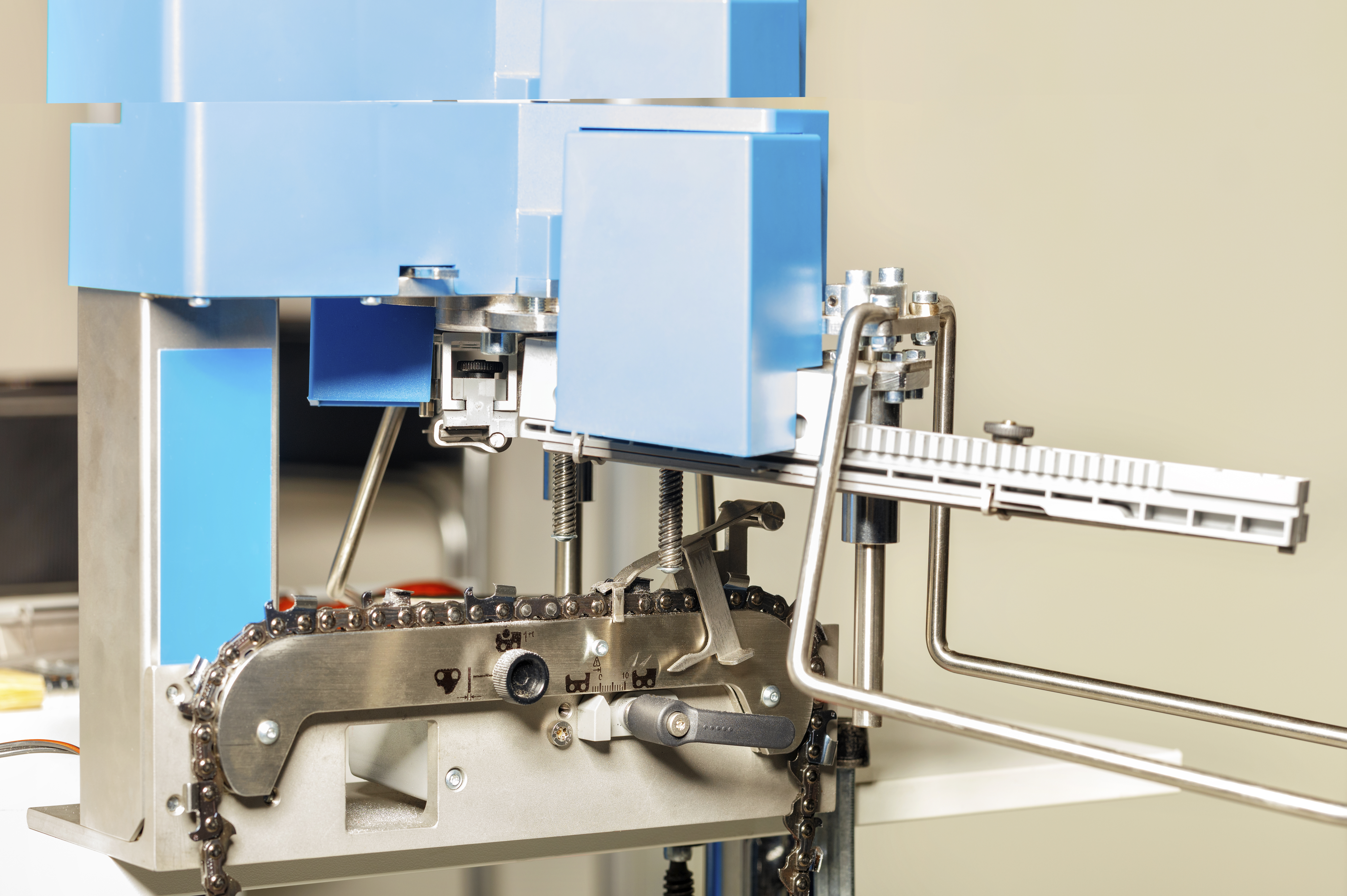
Vertical injection moulding machines occupy a unique and indispensable position in the manufacture of electrical components. Their vertical clamping axis and open mould access make them the preferred ...
Read More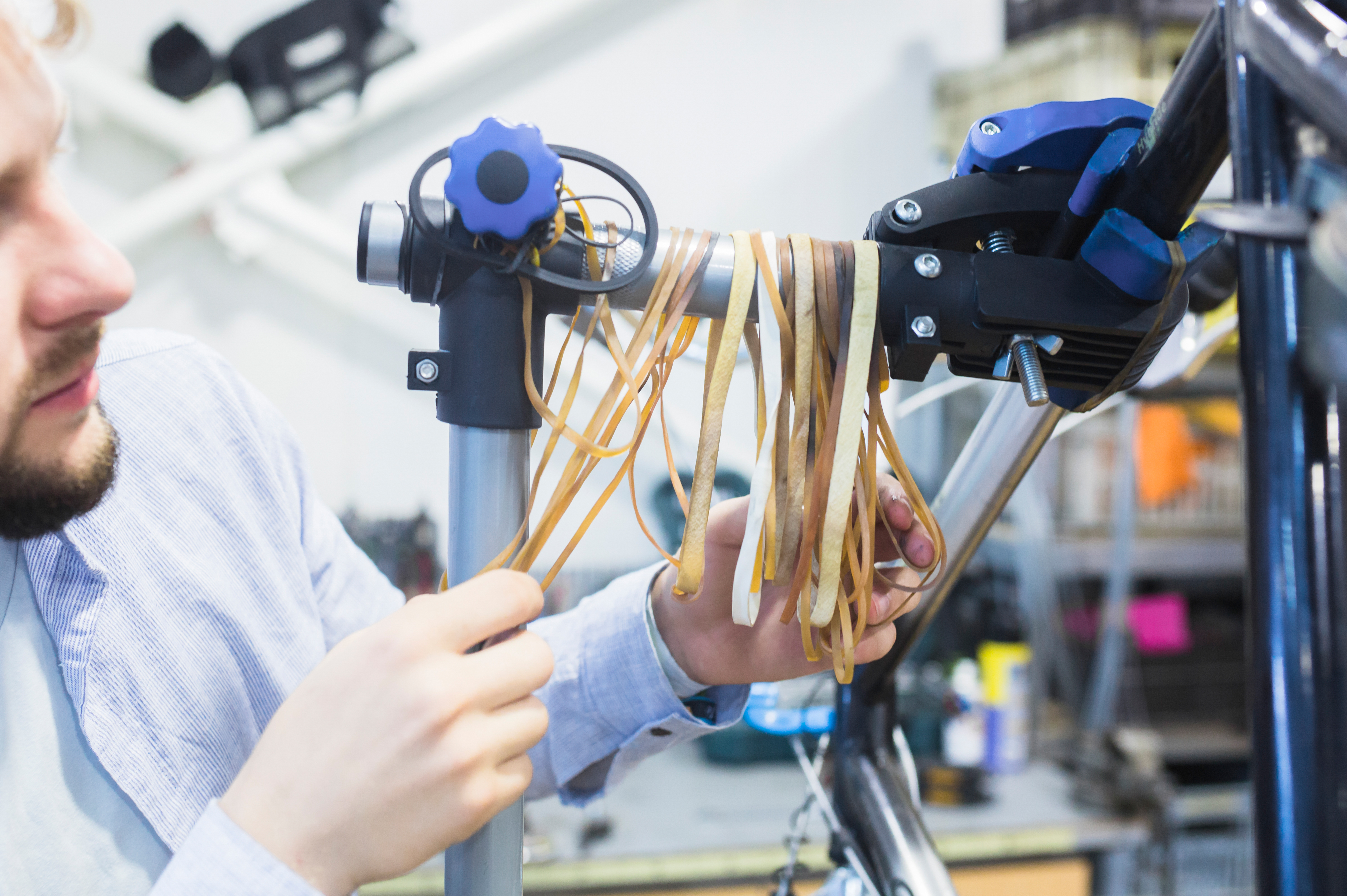
In cable processing and wire harness manufacturing, stripping insulation cleanly and consistently is one of the most fundamental — and challenging — tasks on the production floor. Pneumatic wire strip...
Read More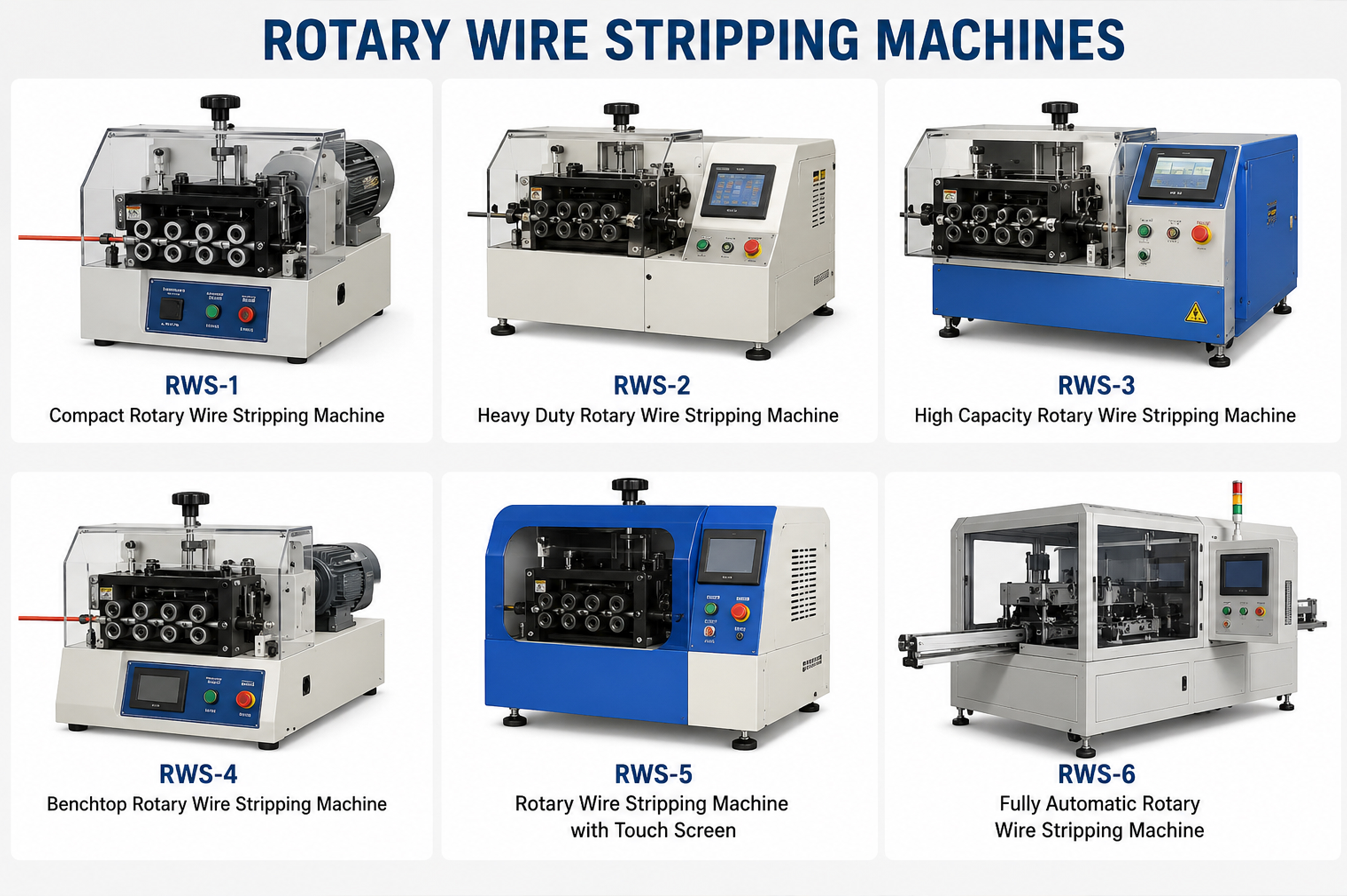
Not all cable stripping tasks are equal. While standard pneumatic strippers handle single-layer insulated wire with ease, complex cable constructions — multi-layer insulation, shielded cables, coaxial...
Read More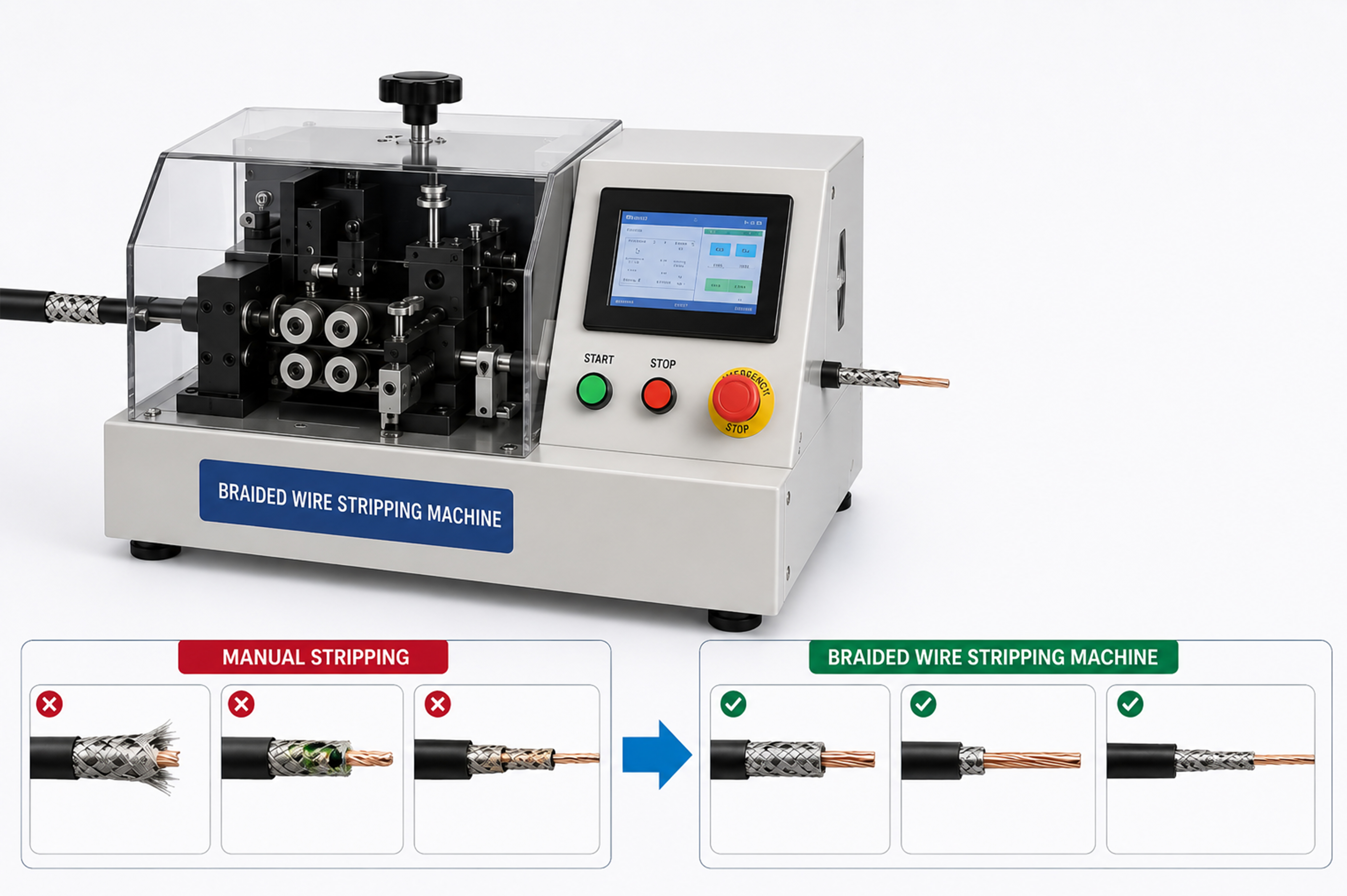
Braided shields are a fundamental component of shielded cables, EMI-suppressed assemblies, and high-performance data cables. They provide electromagnetic interference protection, mechanical reinforcem...
Read More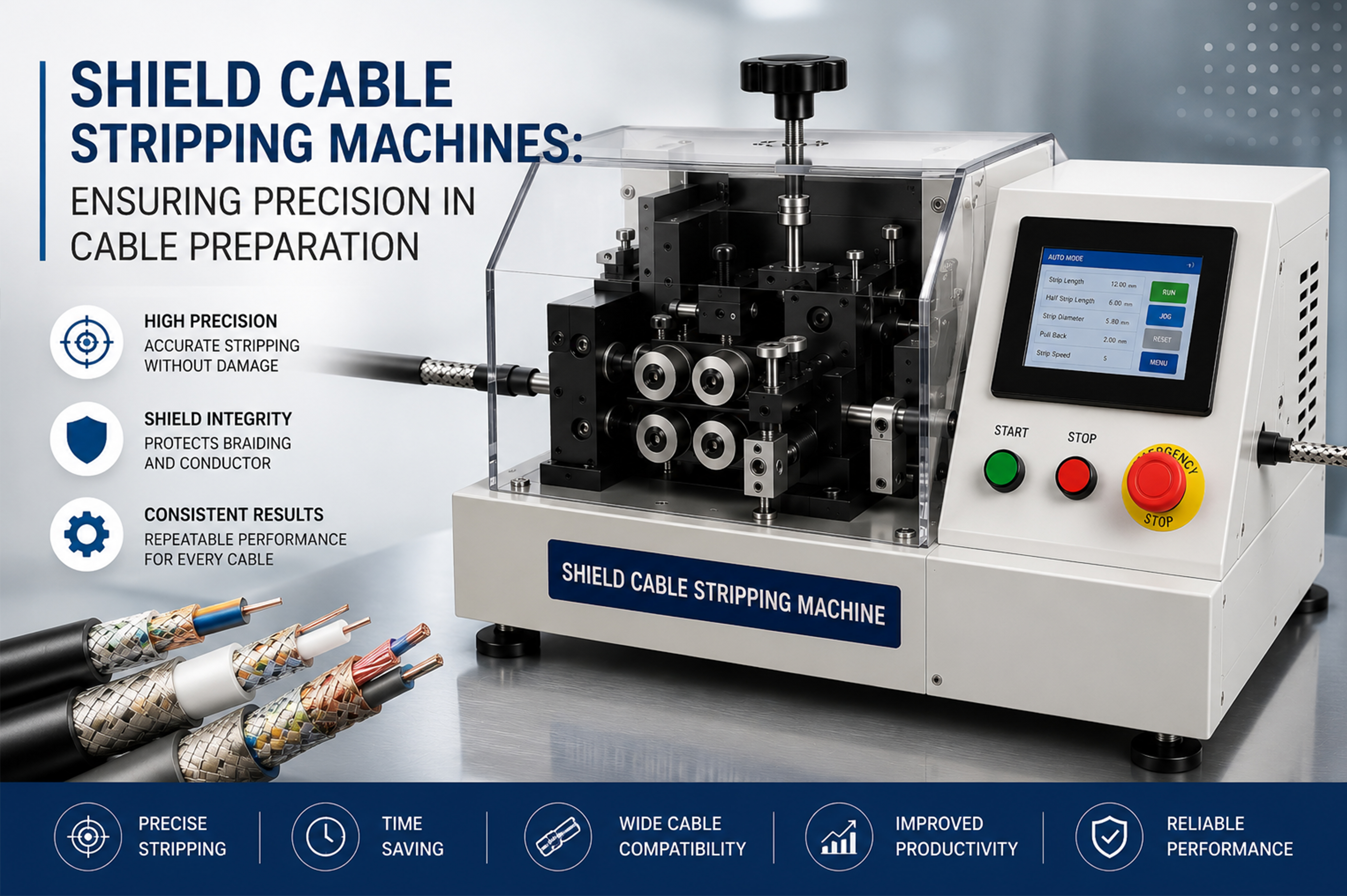
Shielded cables are the backbone of modern electrical and electronic systems where signal integrity and electromagnetic compatibility (EMC) are critical. From automotive CAN networks to industrial ser...
Read More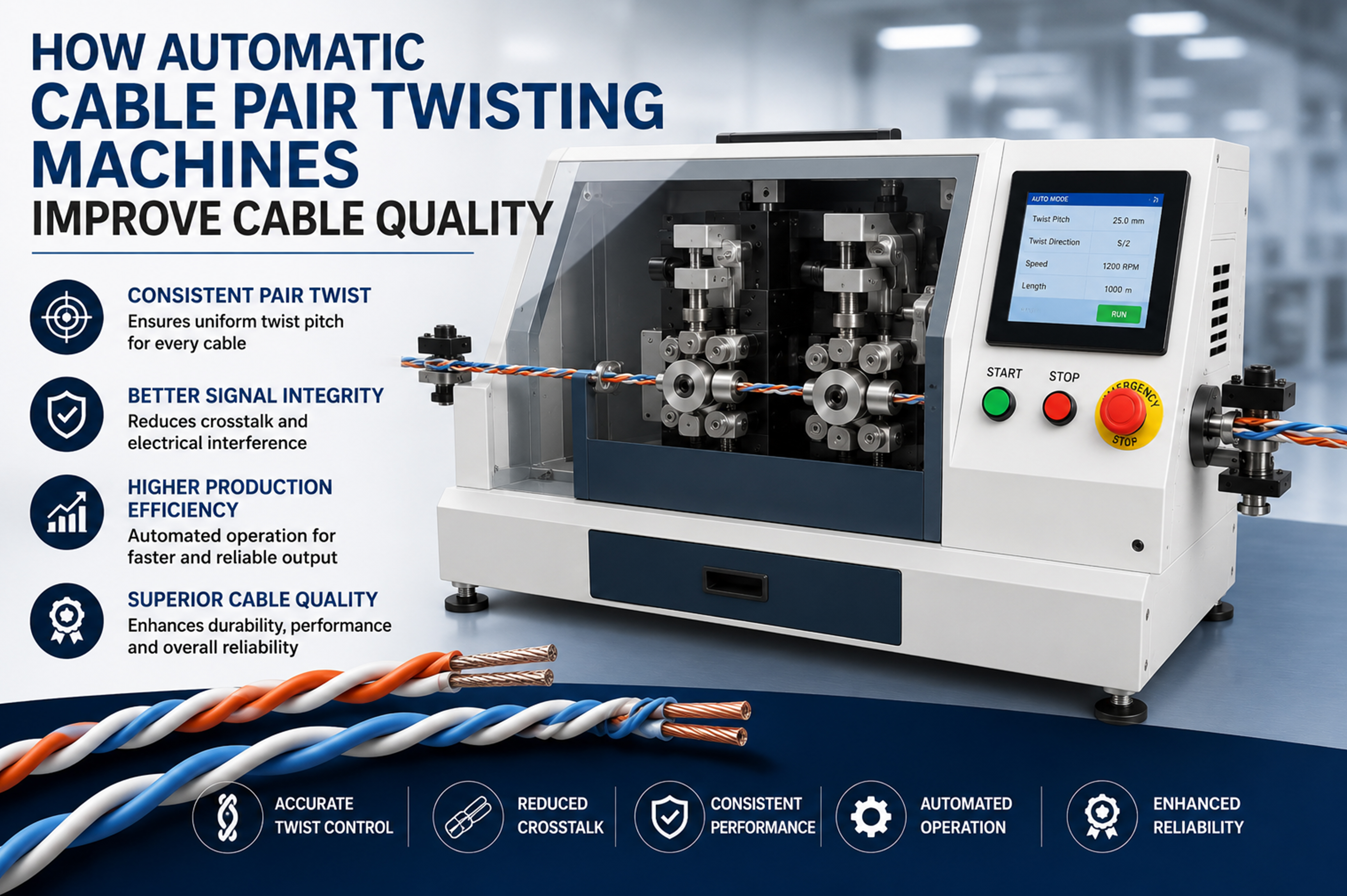
Twisted pair cables are ubiquitous in modern electrical and data systems — from automotive wire harnesses to industrial control wiring, from building automation networks to high-speed data communicati...
Read More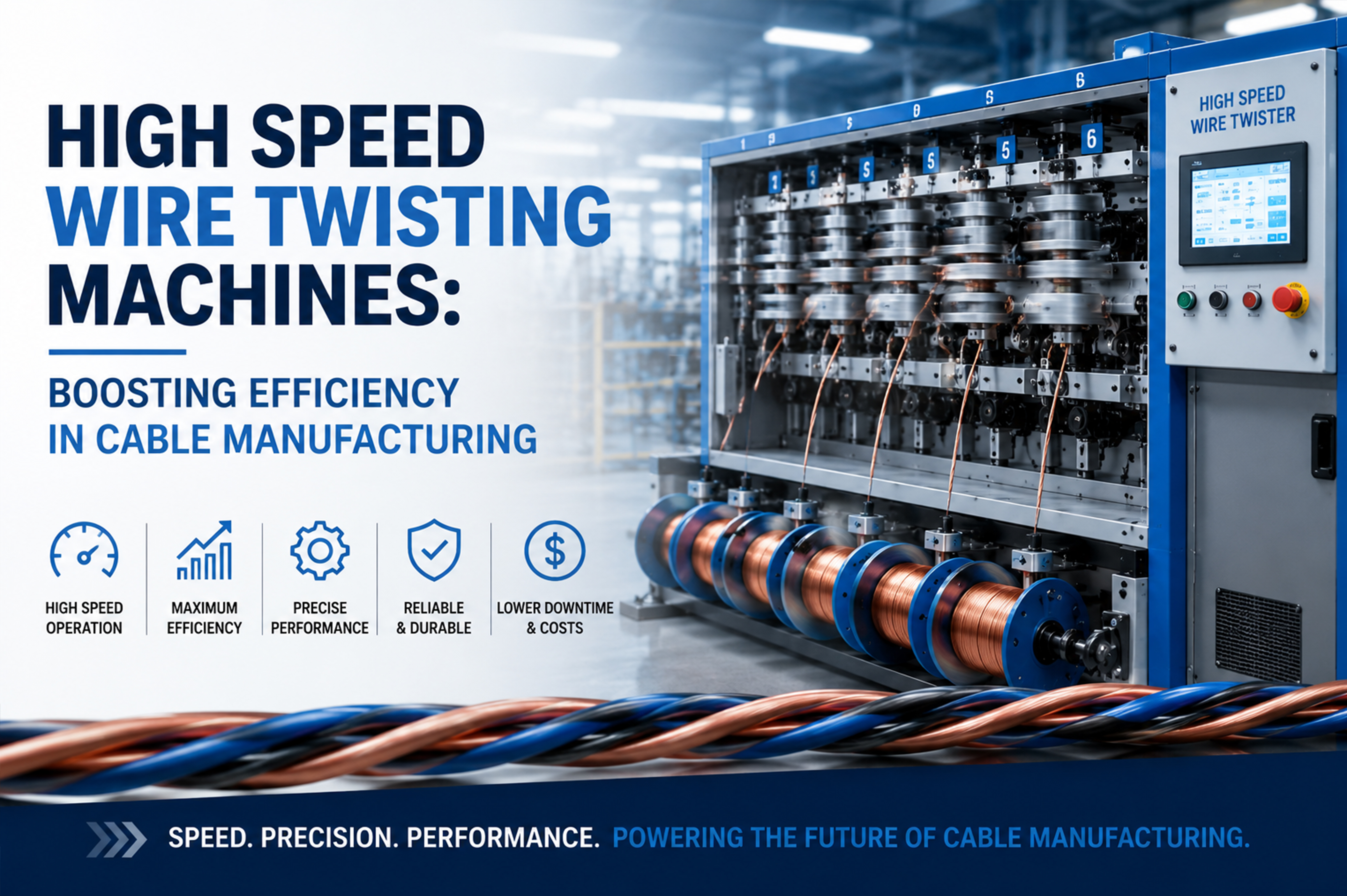
In cable manufacturing, production speed is a critical competitive advantage. High-volume customers — automotive OEMs, harness assemblers, and industrial cable producers — demand consistent quality at...
Read More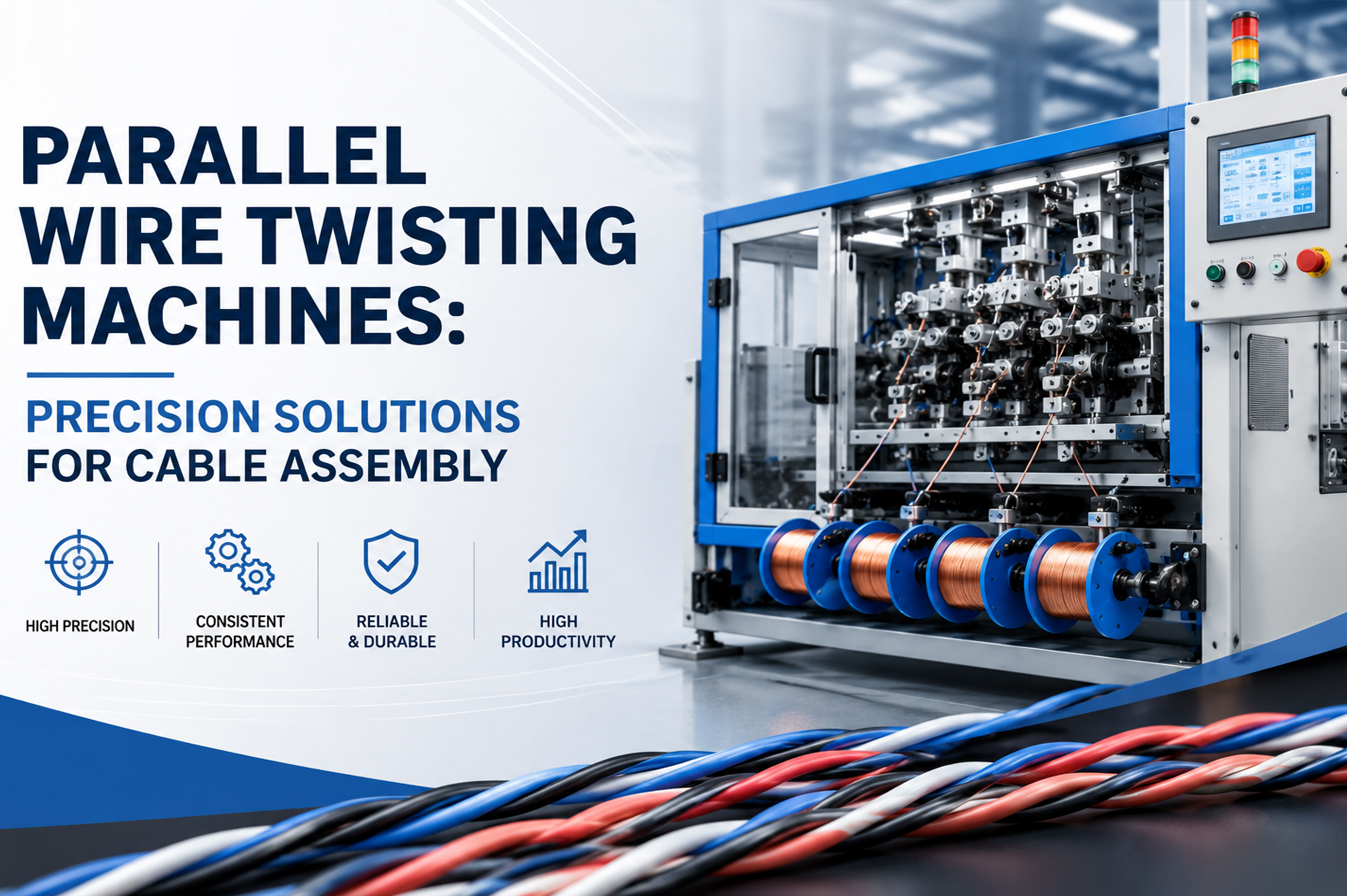
Parallel wire twisting — the controlled twisting of two or more wires running in parallel into a defined twisted configuration — is a core process in wire harness and cable assembly manufacturing. Unl...
Read More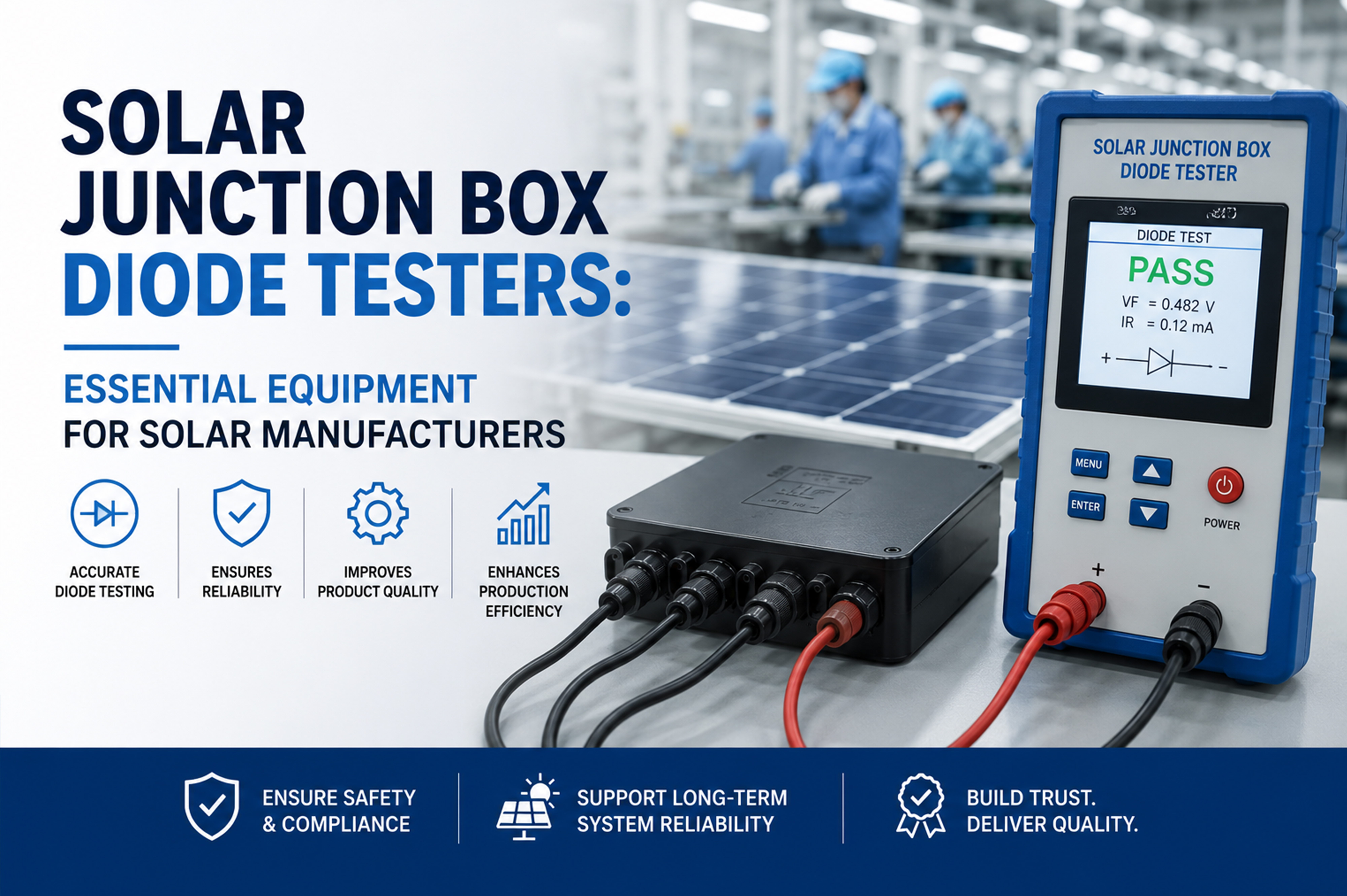
The solar junction box is one of the most critical components on a photovoltaic (PV) module. It houses the bypass diodes that protect solar cells from the destructive effects of partial shading and re...
Read More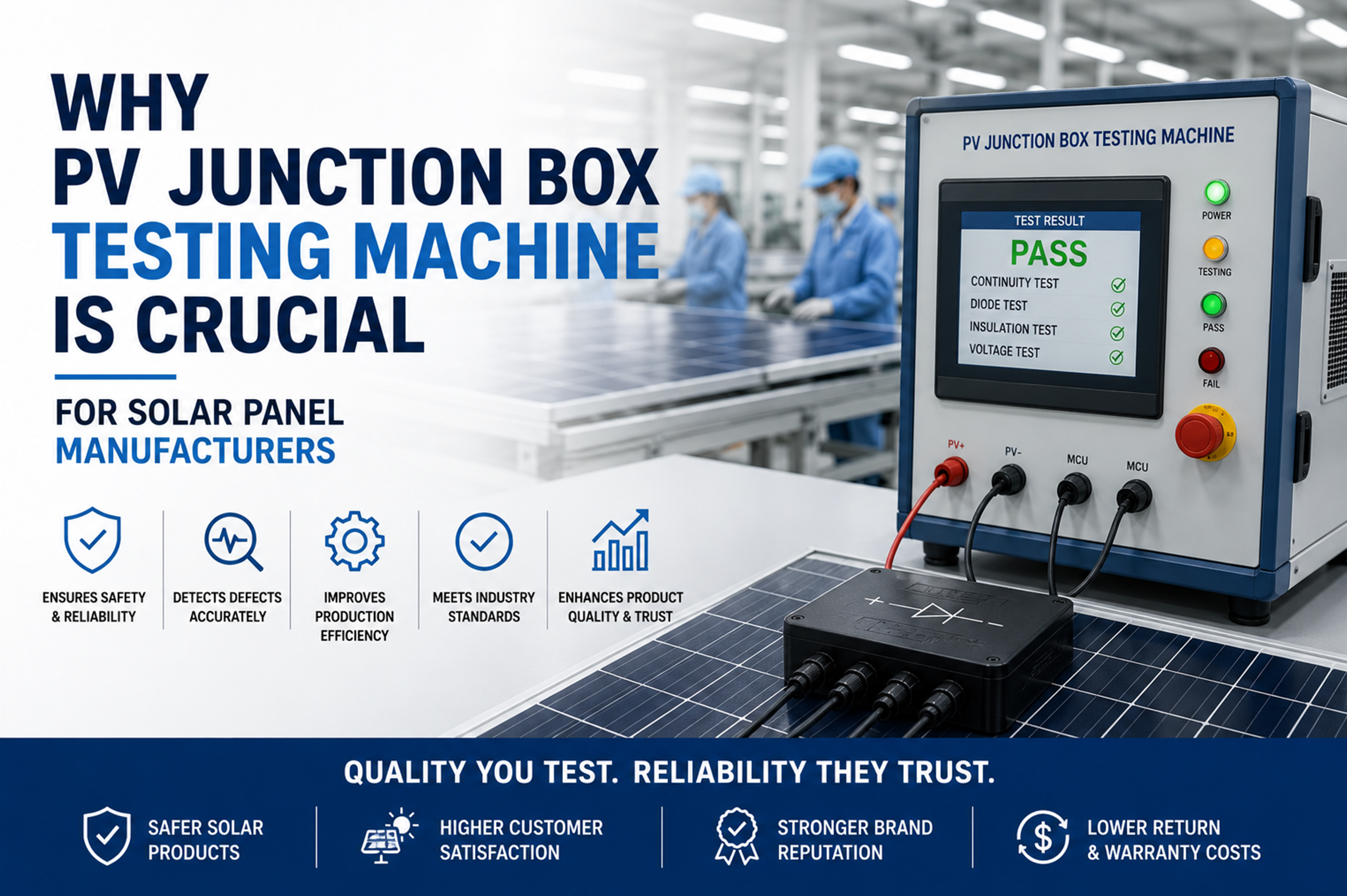
The photovoltaic (PV) junction box is a small component — but its impact on solar module performance, safety, and service life is enormous. As the electrical hub of the solar module, the junction box ...
Read More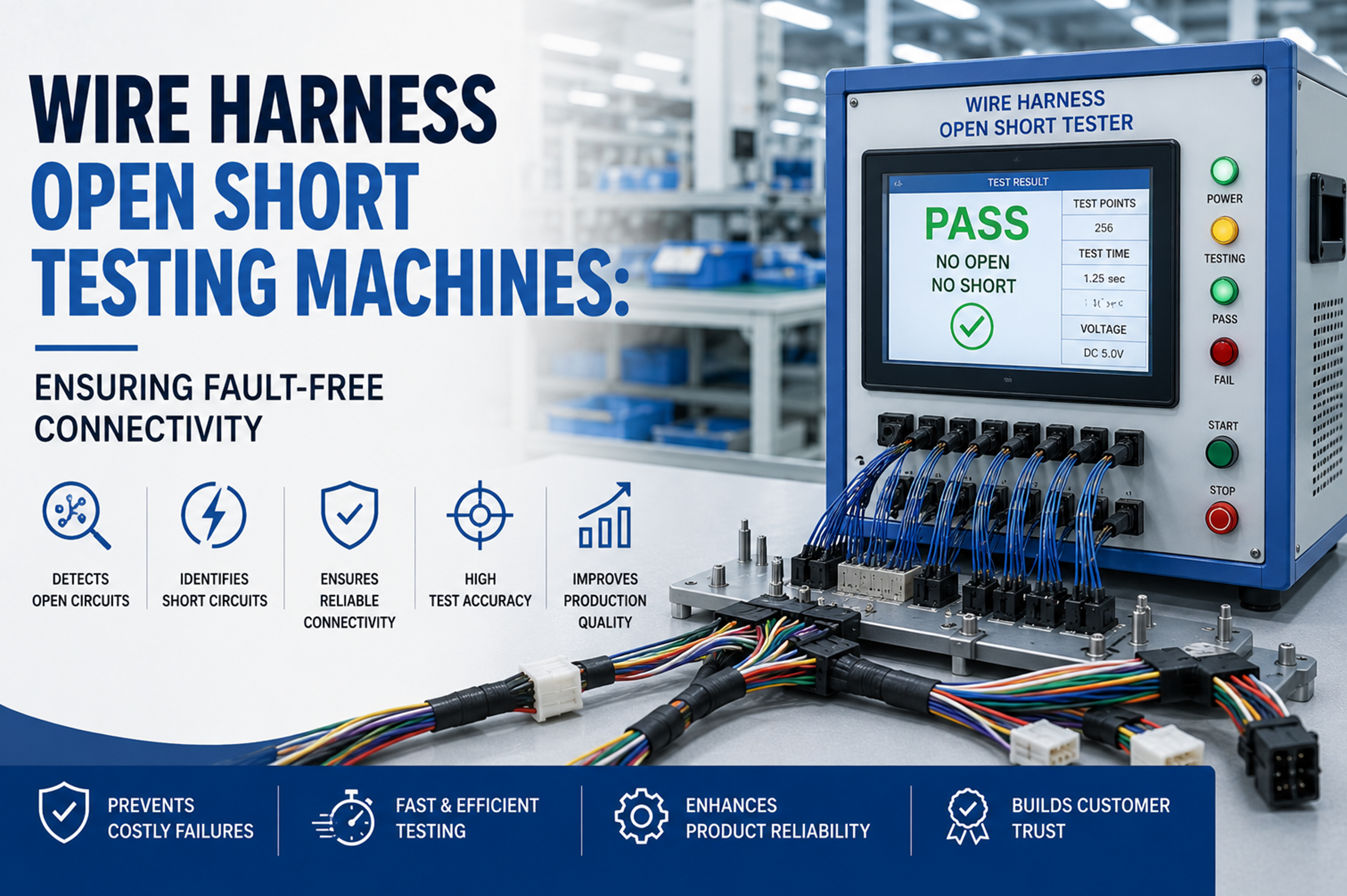
A wire harness is only as reliable as its worst connection. In complex harnesses carrying dozens or hundreds of individual circuits, a single open circuit or unintended short can disable critical syst...
Read More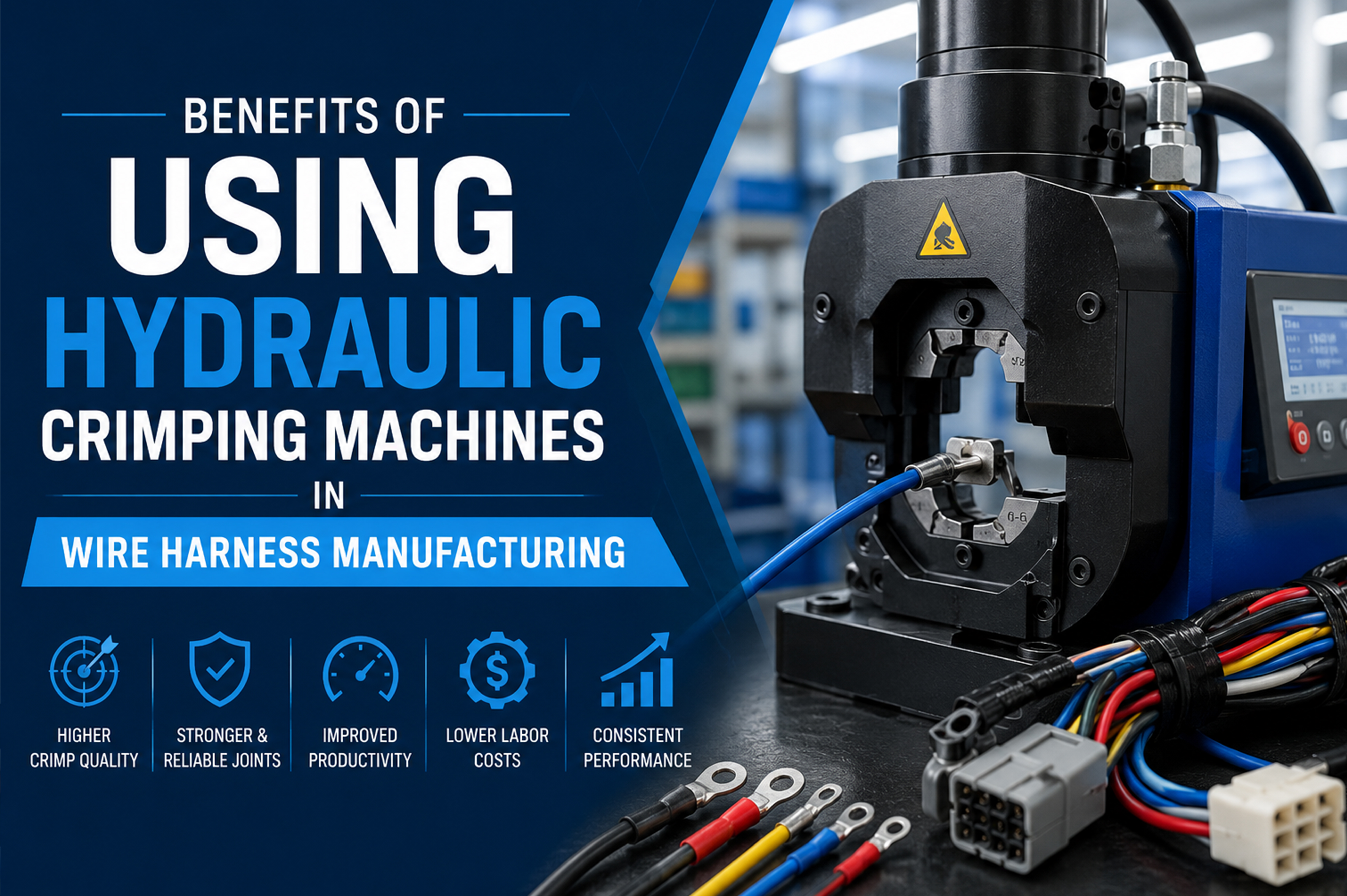
Wire harness manufacturing depends on terminations that can withstand mechanical stress, current load, and years of service without failure. For large-gauge cables, lugs, and heavy-duty connectors, hy...
Read More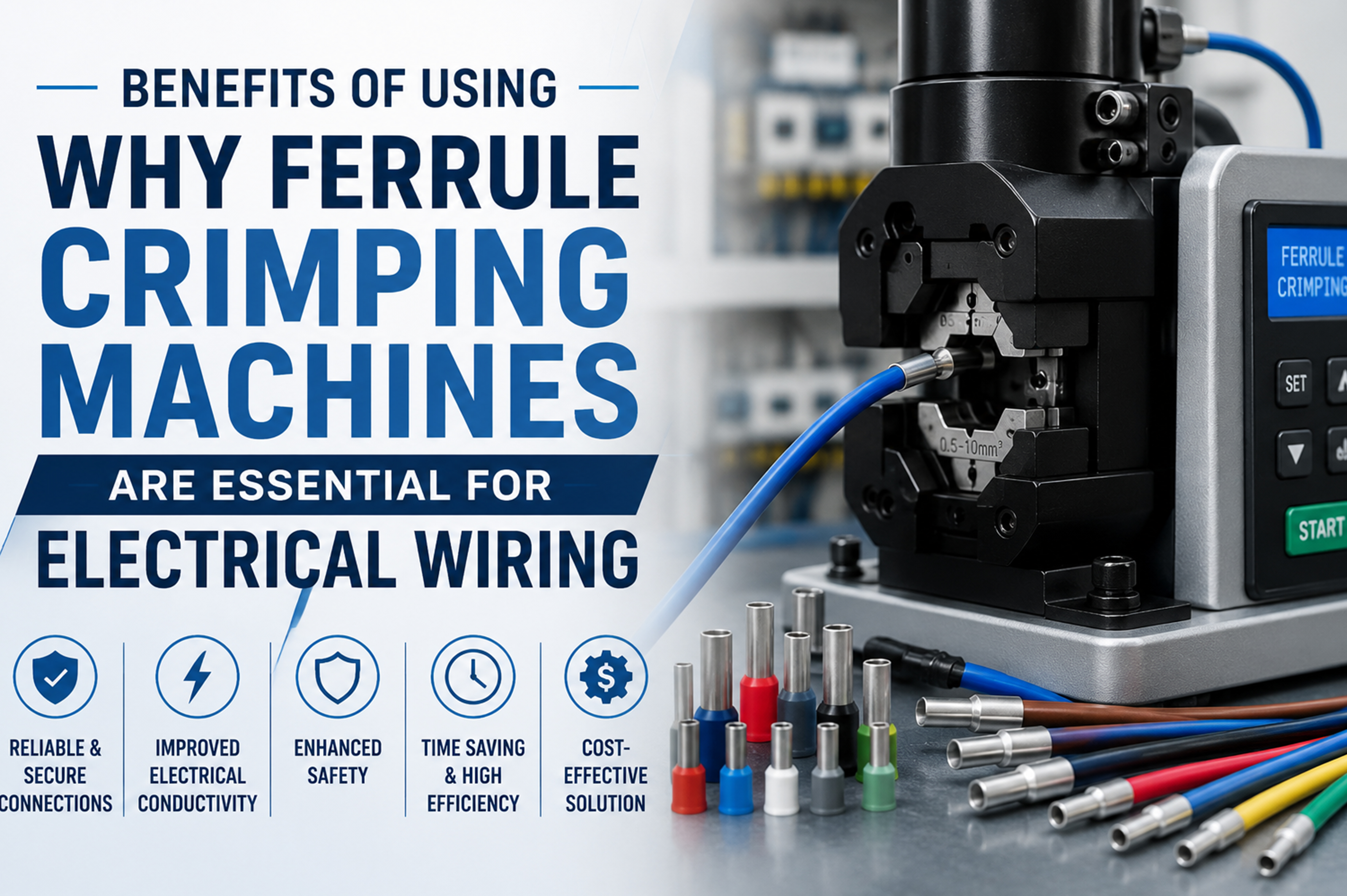
Ferrules play a small but critical role in electrical wiring: protecting stranded wire ends, ensuring secure terminal block connections, and preventing strand fraying that can cause intermittent fault...
Read More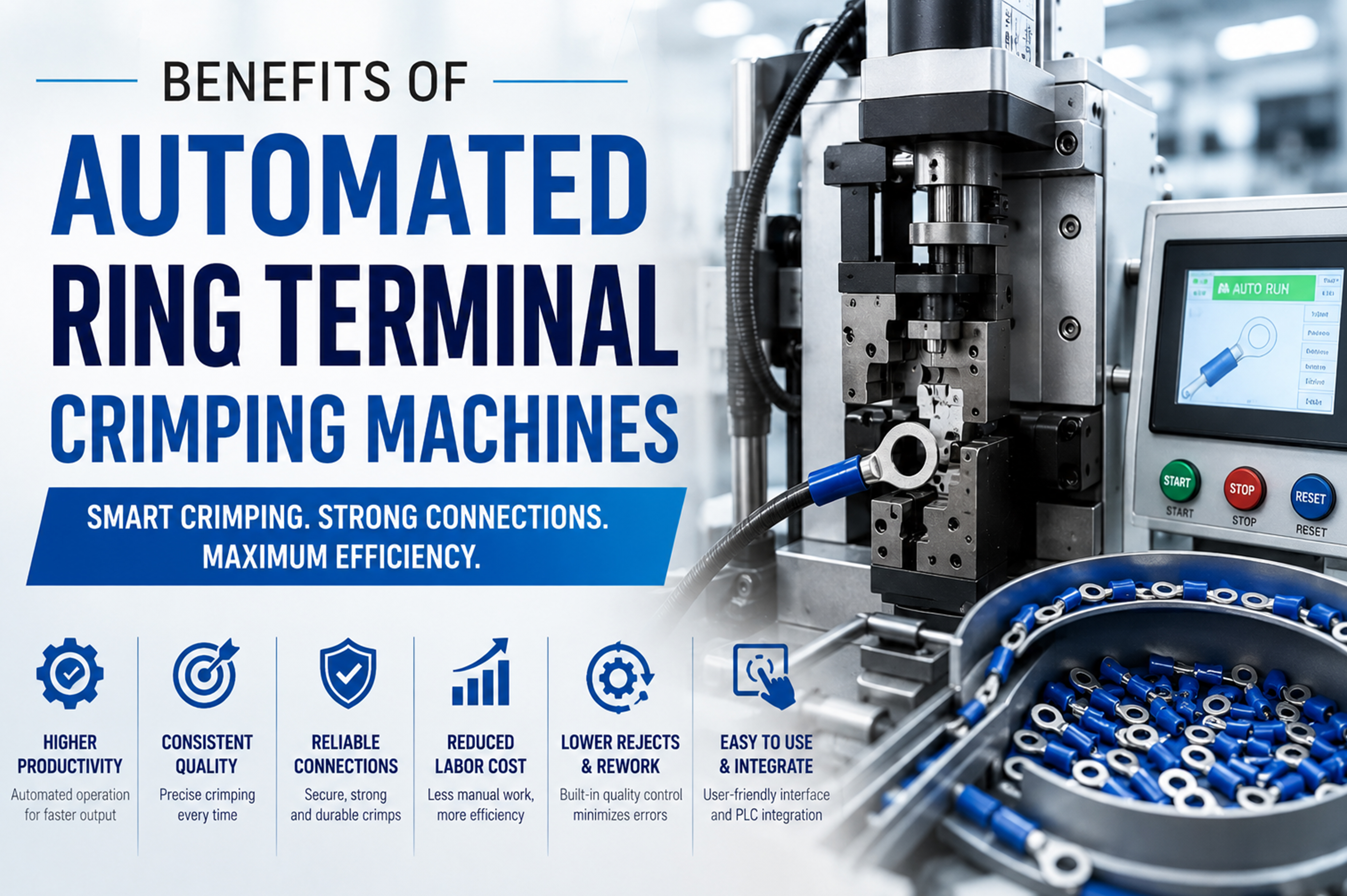
Ring terminals are used extensively in grounding connections, battery terminals, and stud-mounted electrical joints — applications where a weak or inconsistent crimp can have serious safety and reliab...
Read More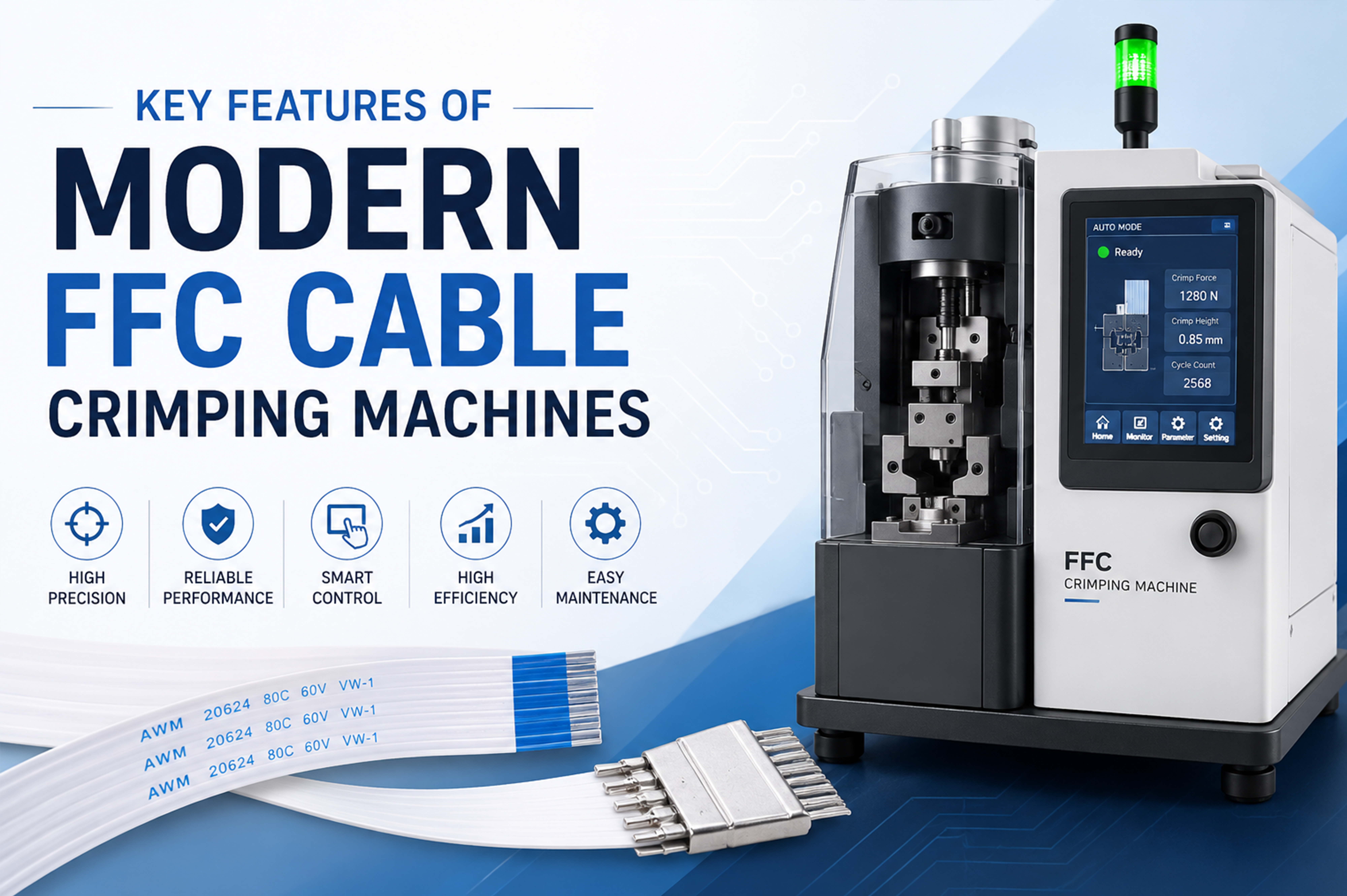
Flat flexible cables (FFC) are widely used in compact consumer electronics, automotive dashboards, and other space-constrained assemblies, where their thin, flat conductor format allows for tight pack...
Read More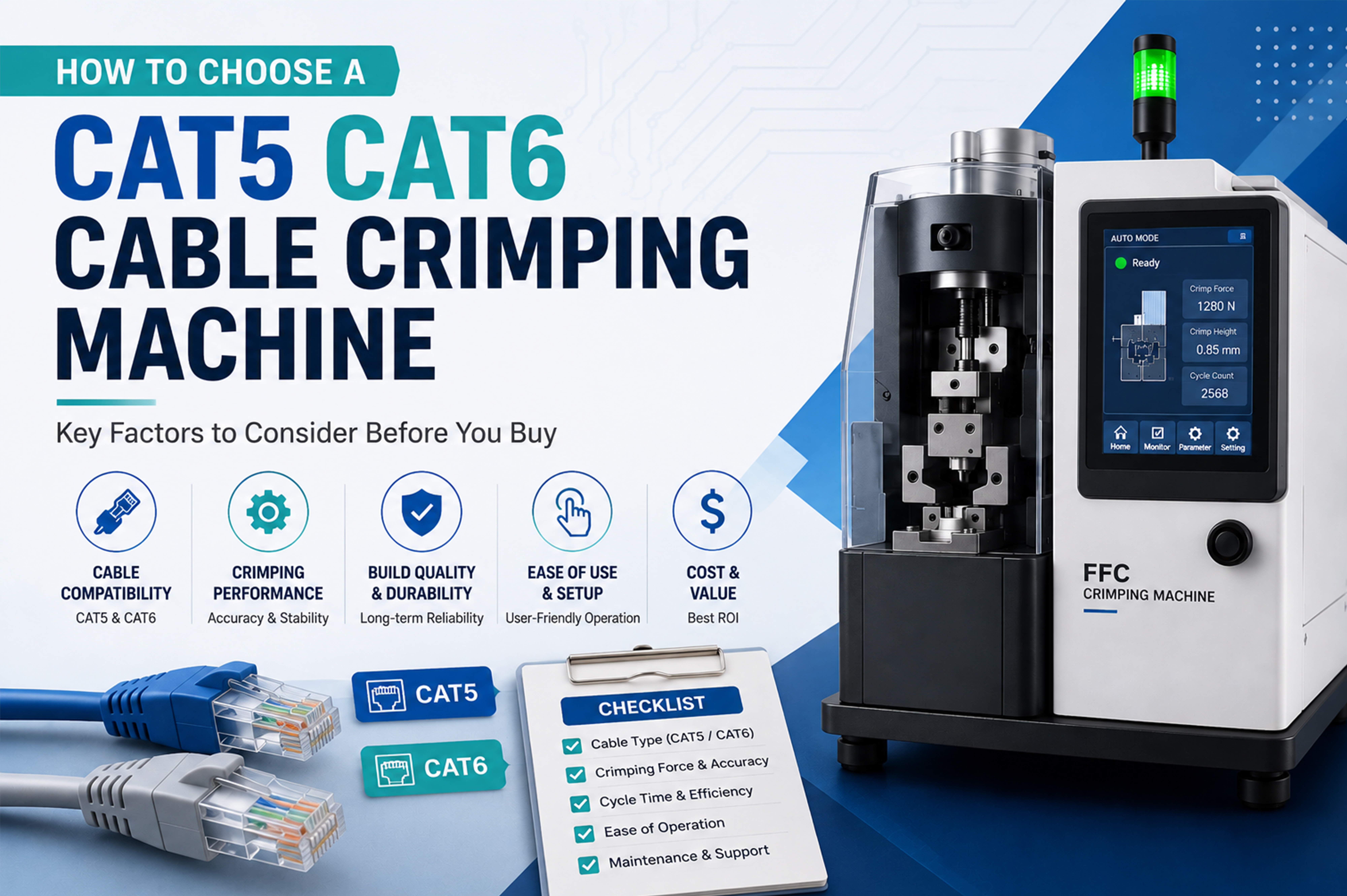
Structured data cabling places strict demands on termination quality — a single inconsistent crimp can compromise signal integrity across an entire network run. Choosing the right CAT5 CAT6 cable crim...
Read More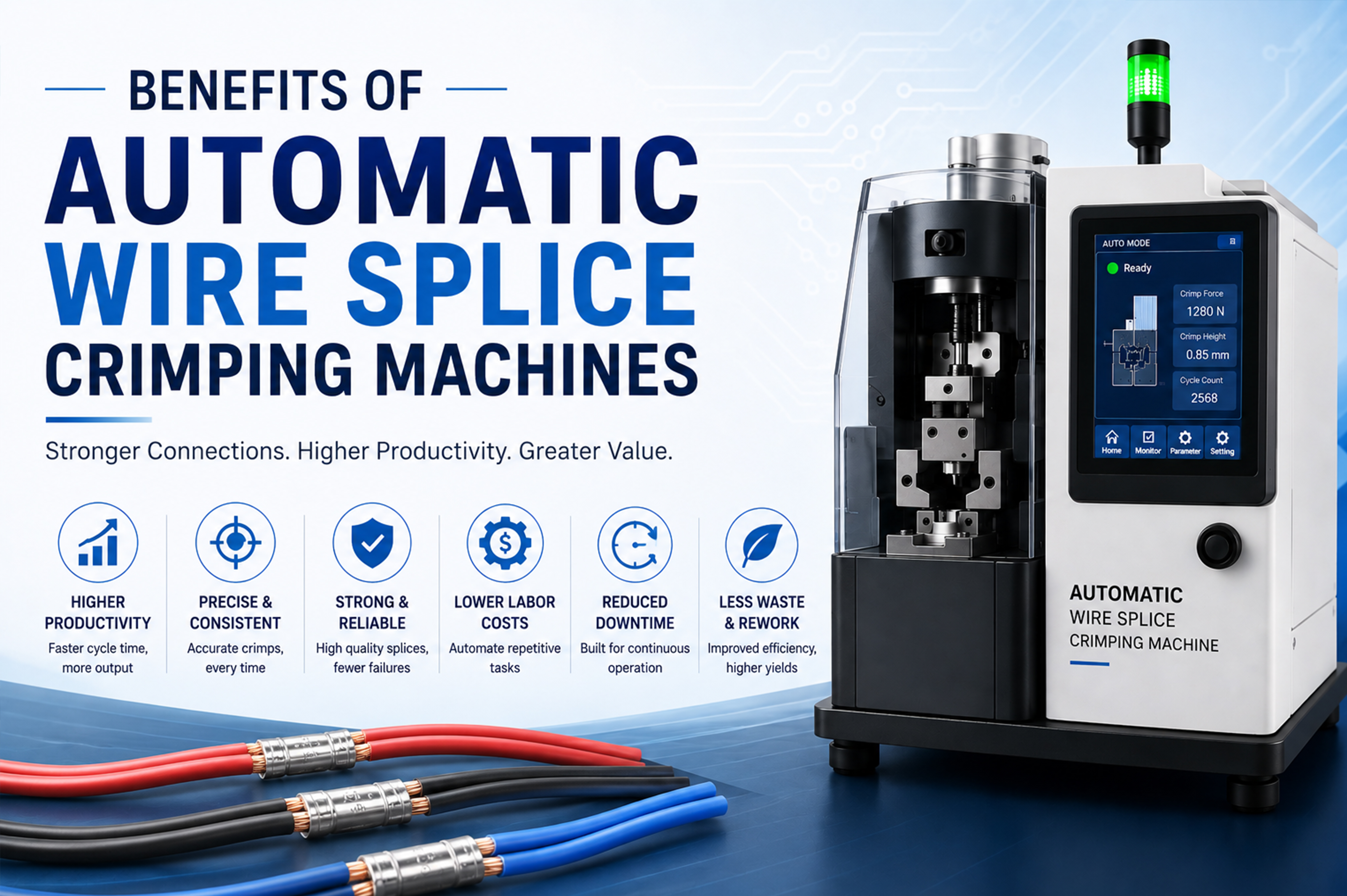
Joining multiple conductors into a single secure connection is a routine but quality-critical step in wire harness manufacturing. Automatic wire splice crimping machines have transformed this process,...
Read More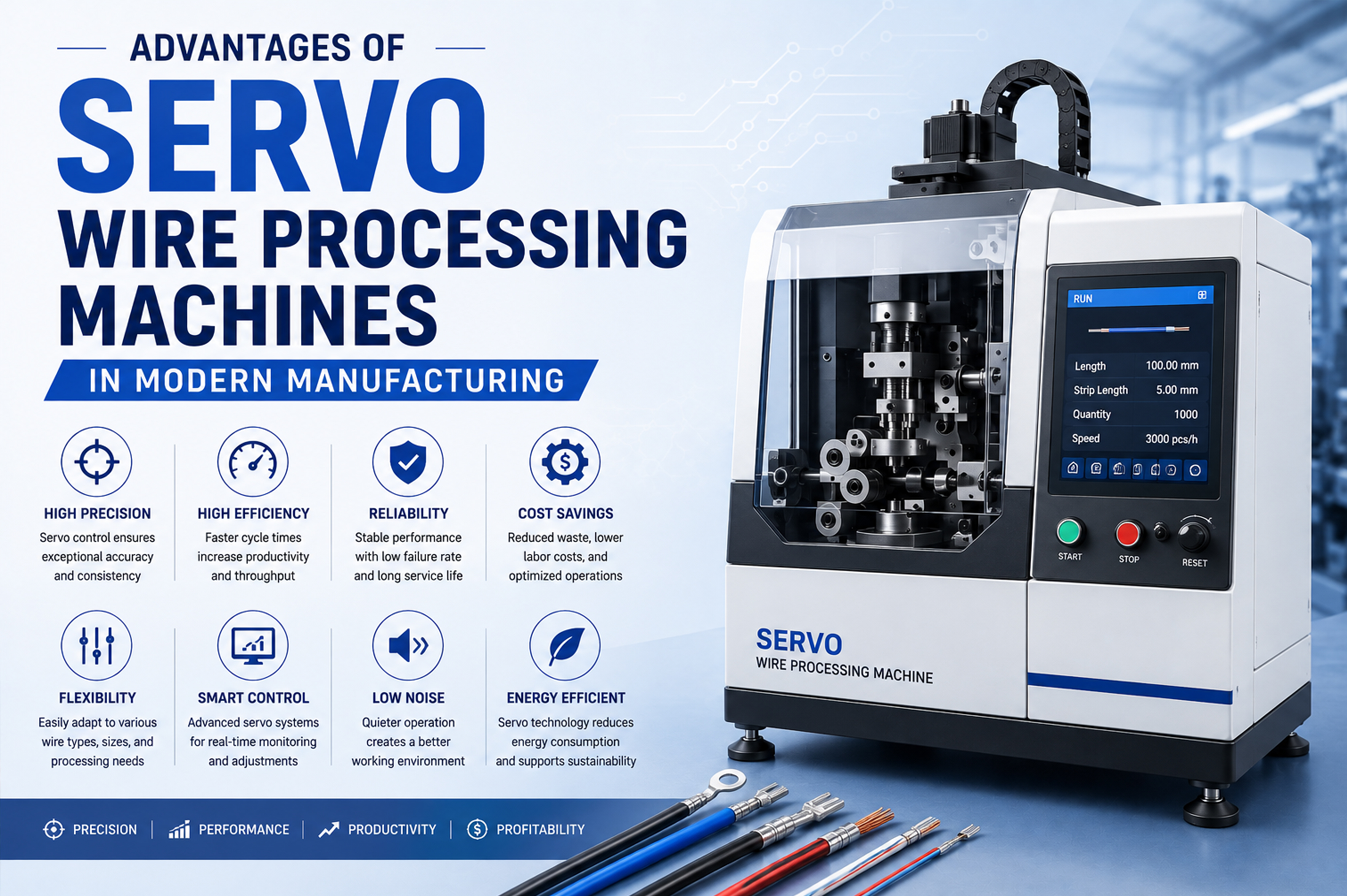
Modern wire processing demands a level of precision and repeatability that purely mechanical or pneumatic systems struggle to deliver consistently at scale. Servo wire processing machines address this...
Read More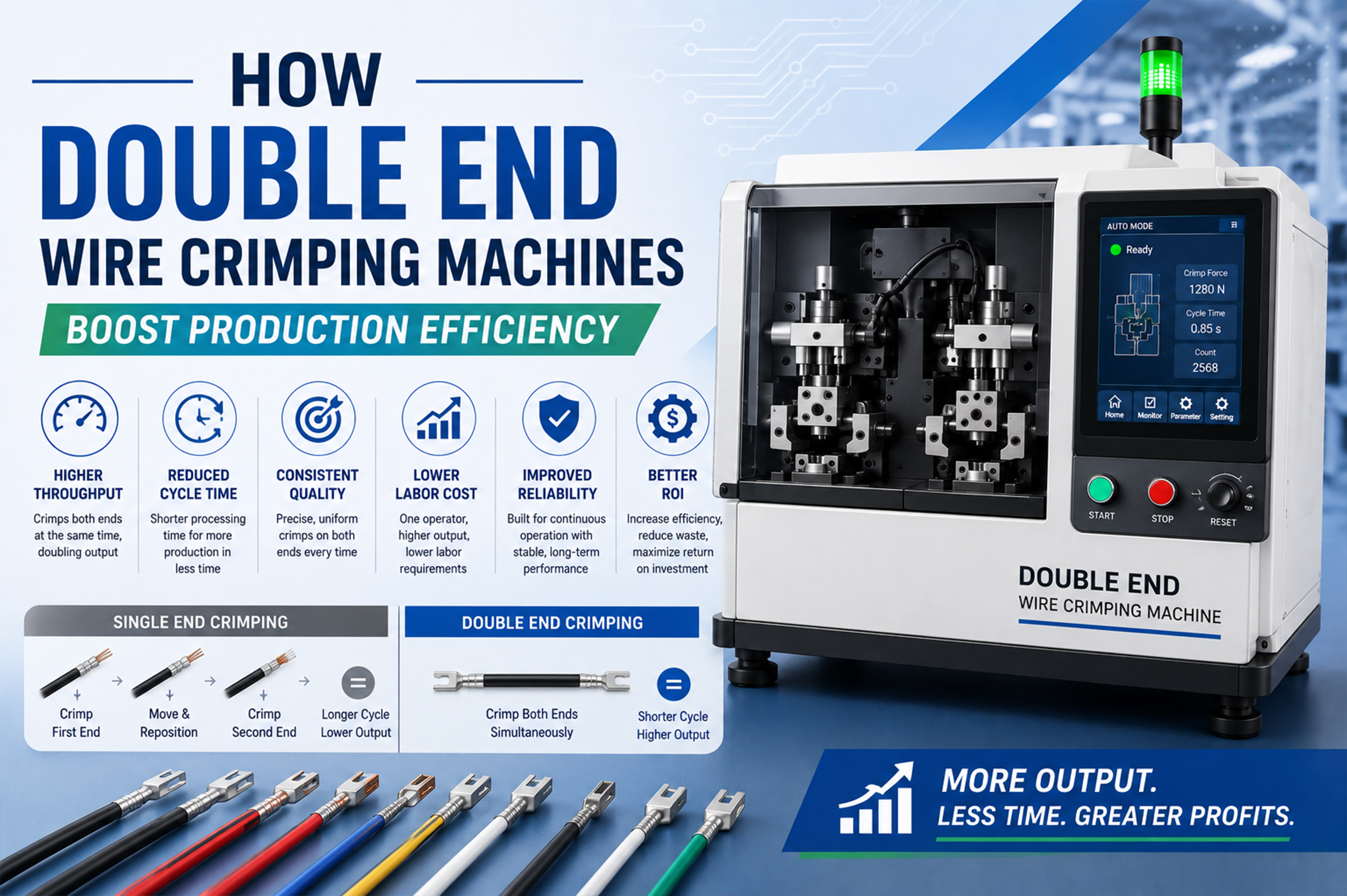
Terminating both ends of a wire is one of the most repetitive operations in lead and jumper wire production, and processing each end as a separate step adds unnecessary handling time and opportunity f...
Read More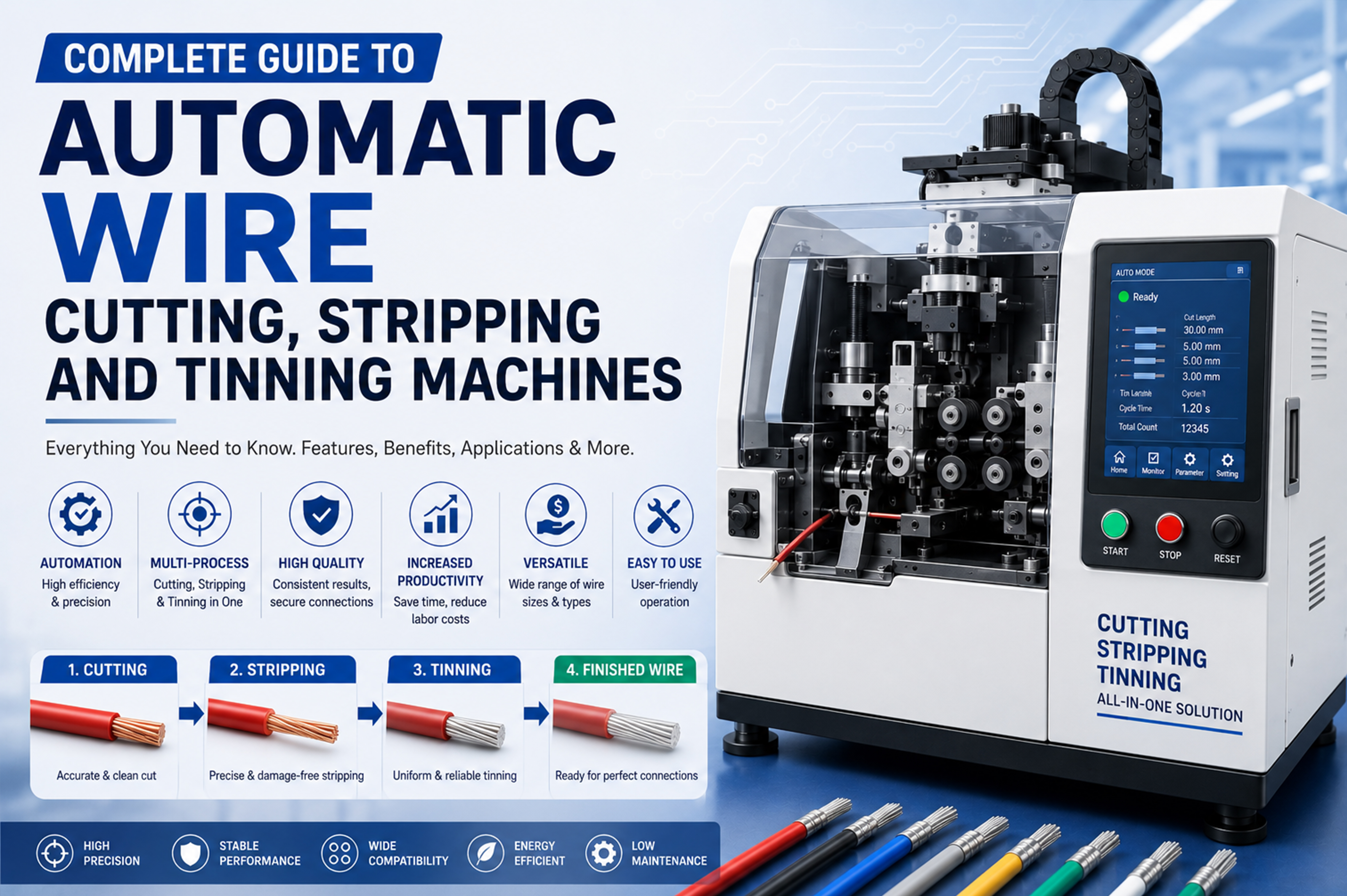
Preparing wire ends for termination traditionally involves several separate steps — cutting, stripping, and, where required, tinning — each introducing handling time and opportunity for inconsistency....
Read More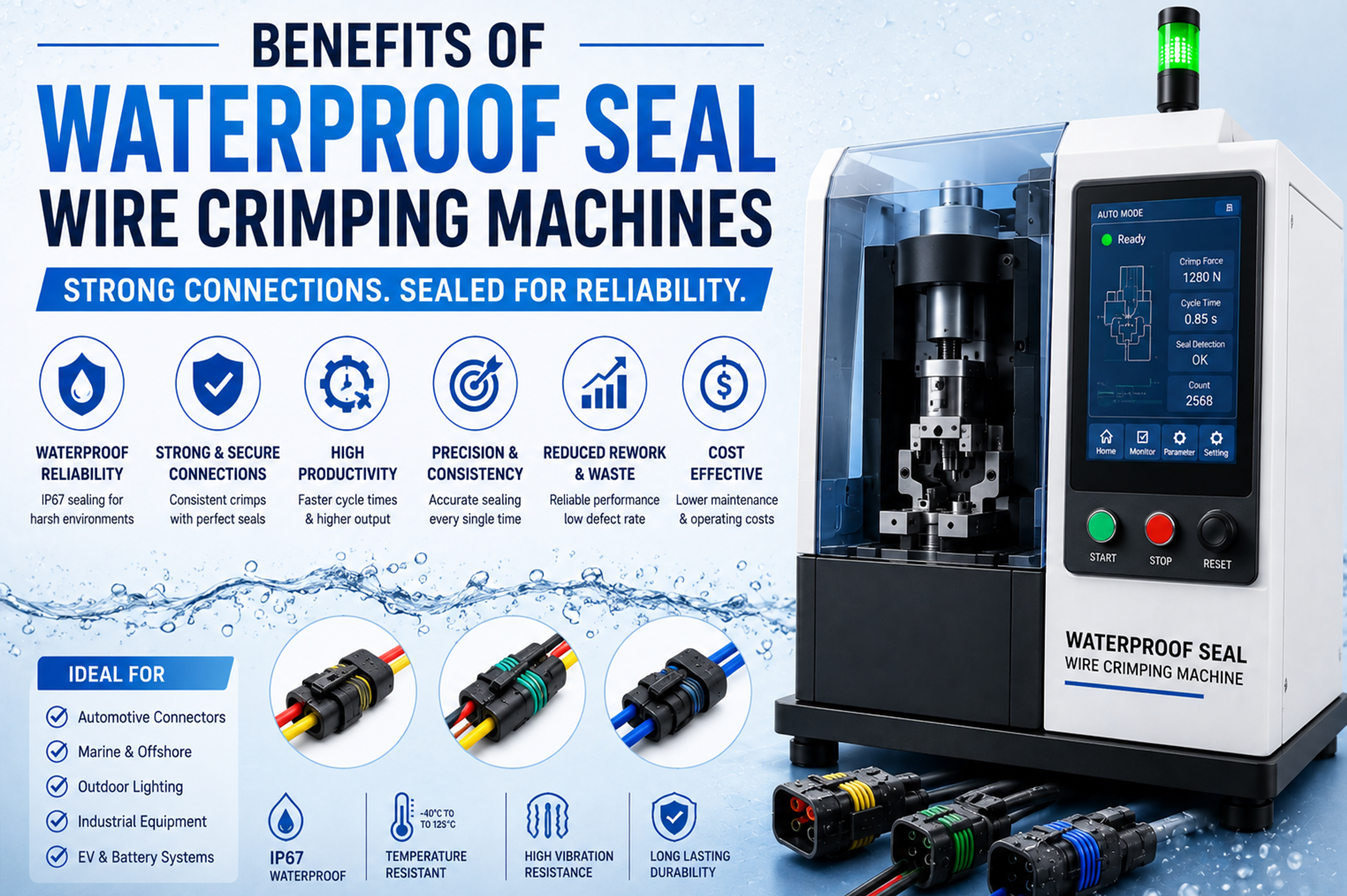
Electrical connections exposed to moisture, dust, and harsh environmental conditions require more than a standard crimp — they require a sealed termination that maintains its protective integrity thro...
Read More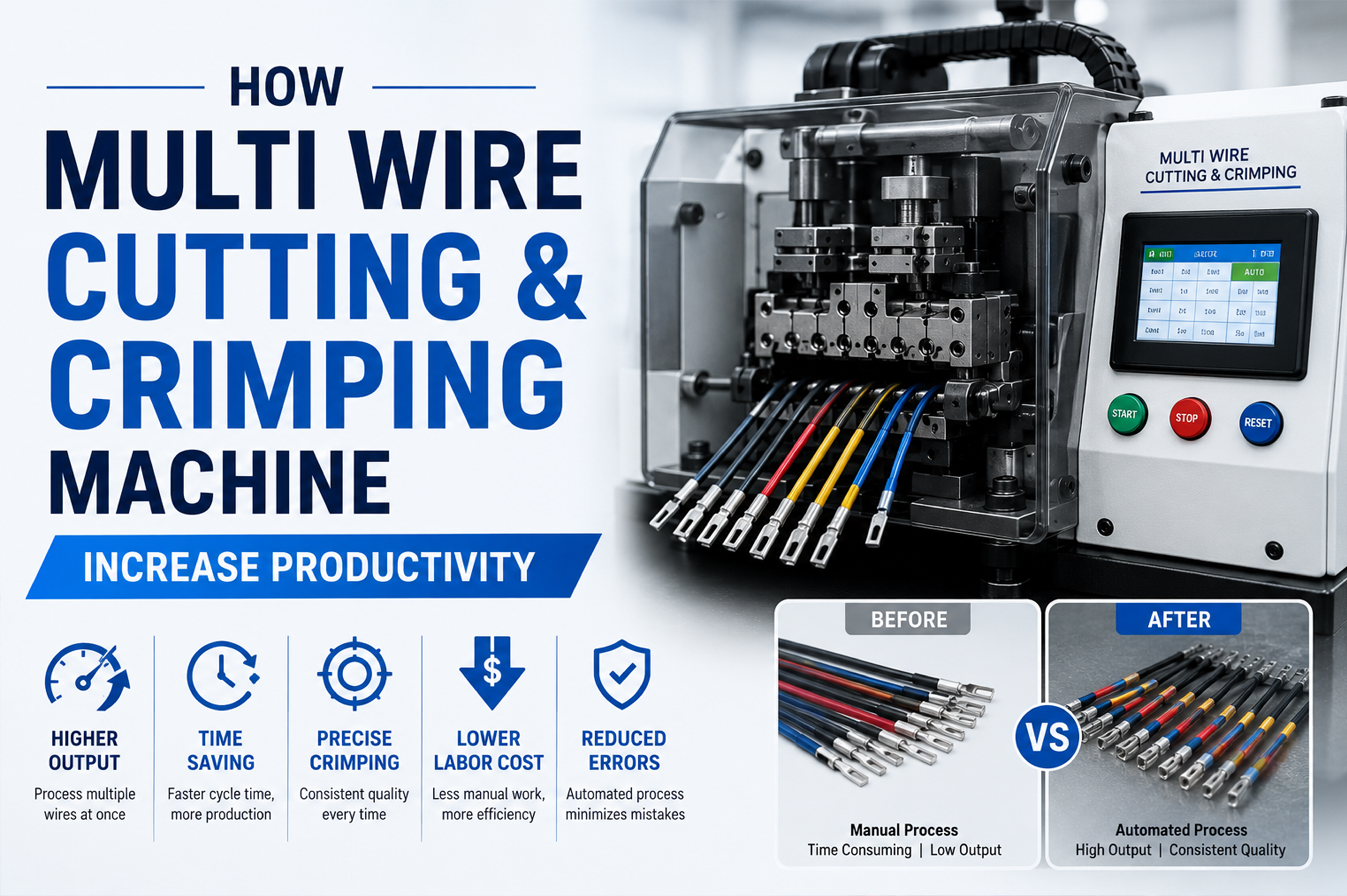
Processing wires one at a time becomes a significant bottleneck as harness complexity and production volumes grow. Multi wire cutting and crimping machines address this directly, cutting and crimping ...
Read More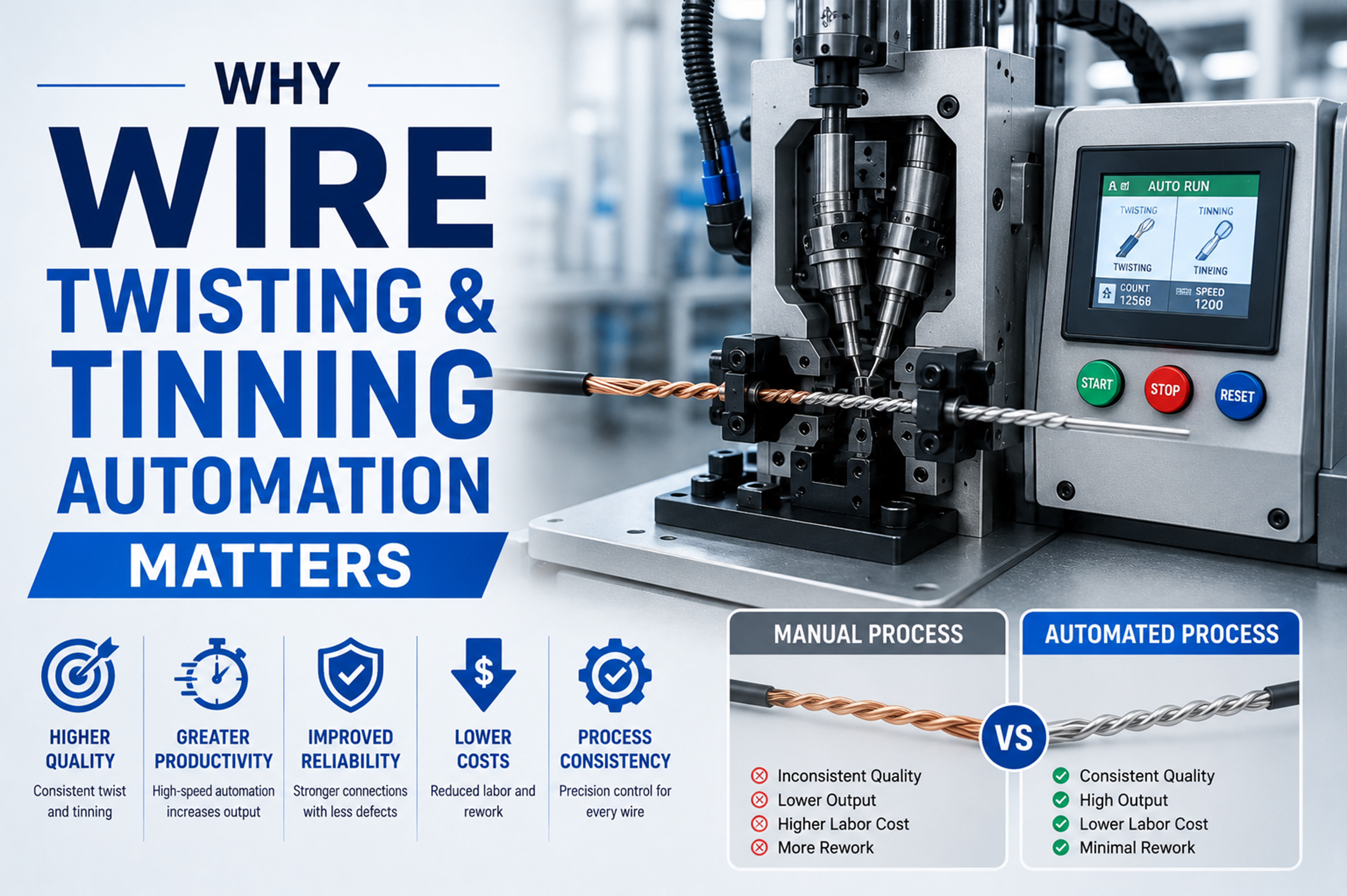
Twisted and tinned wire pairs play an important role in signal integrity, electromagnetic noise reduction, and reliable solder connections — but achieving consistent twist pitch and tin coverage manua...
Read More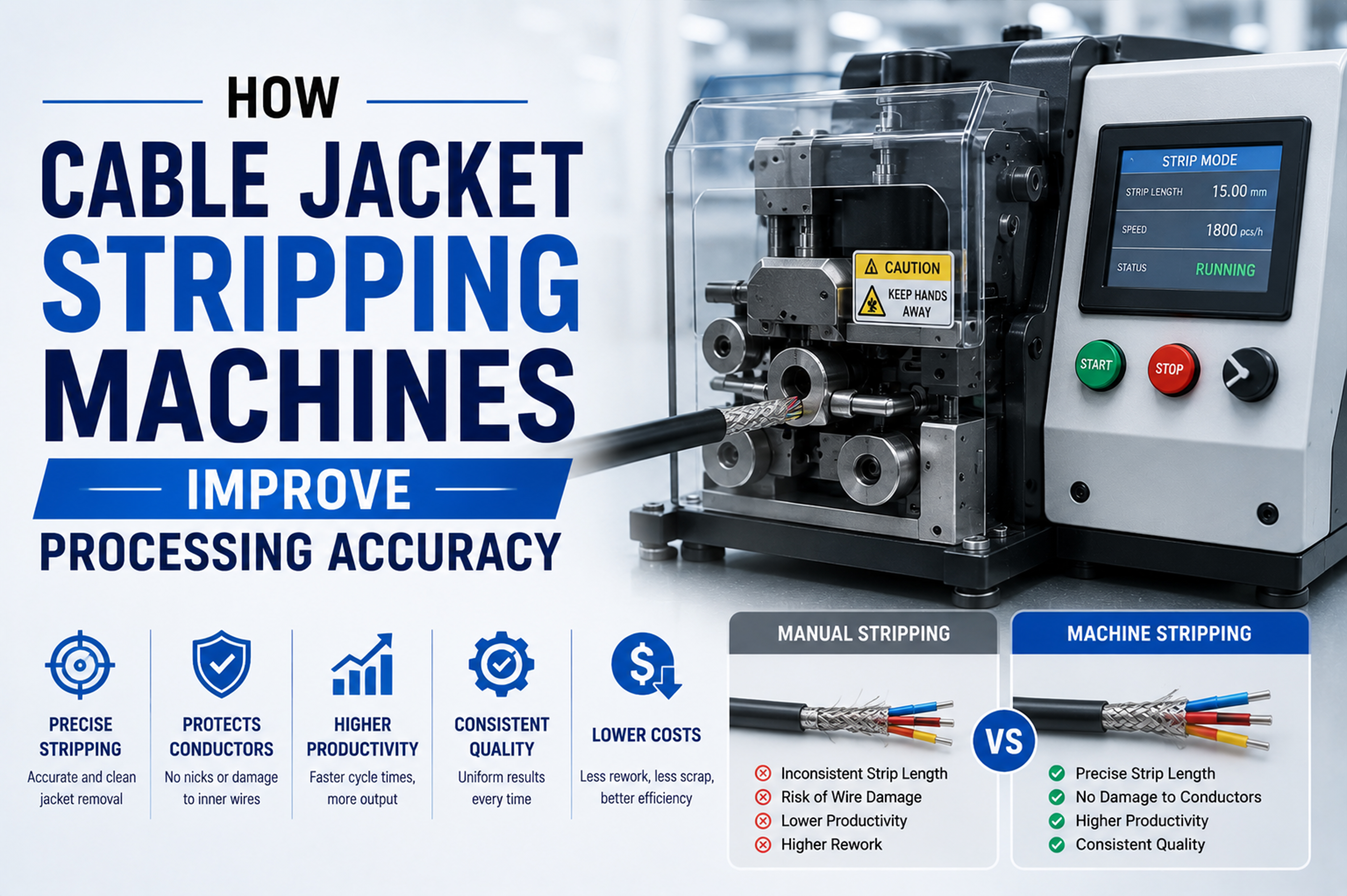
Removing a cable's outer jacket cleanly, without damaging the layers beneath, is a foundational step in cable preparation — and one where small errors compound into significant downstream problems. Ca...
Read More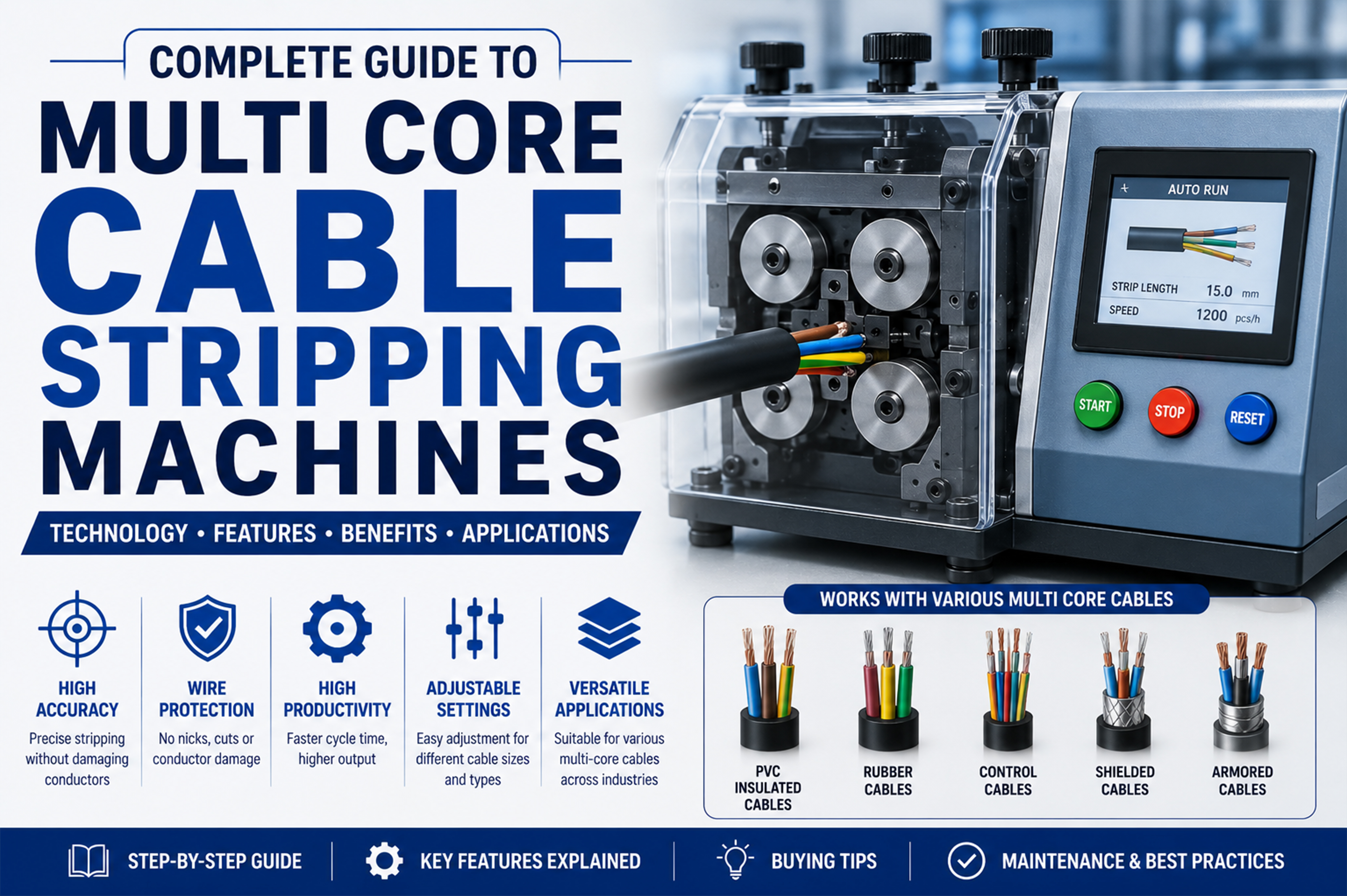
Cables containing several individually insulated conductors within a single jacket present a distinct processing challenge: every core must be stripped to a precise, consistent length without damaging...
Read More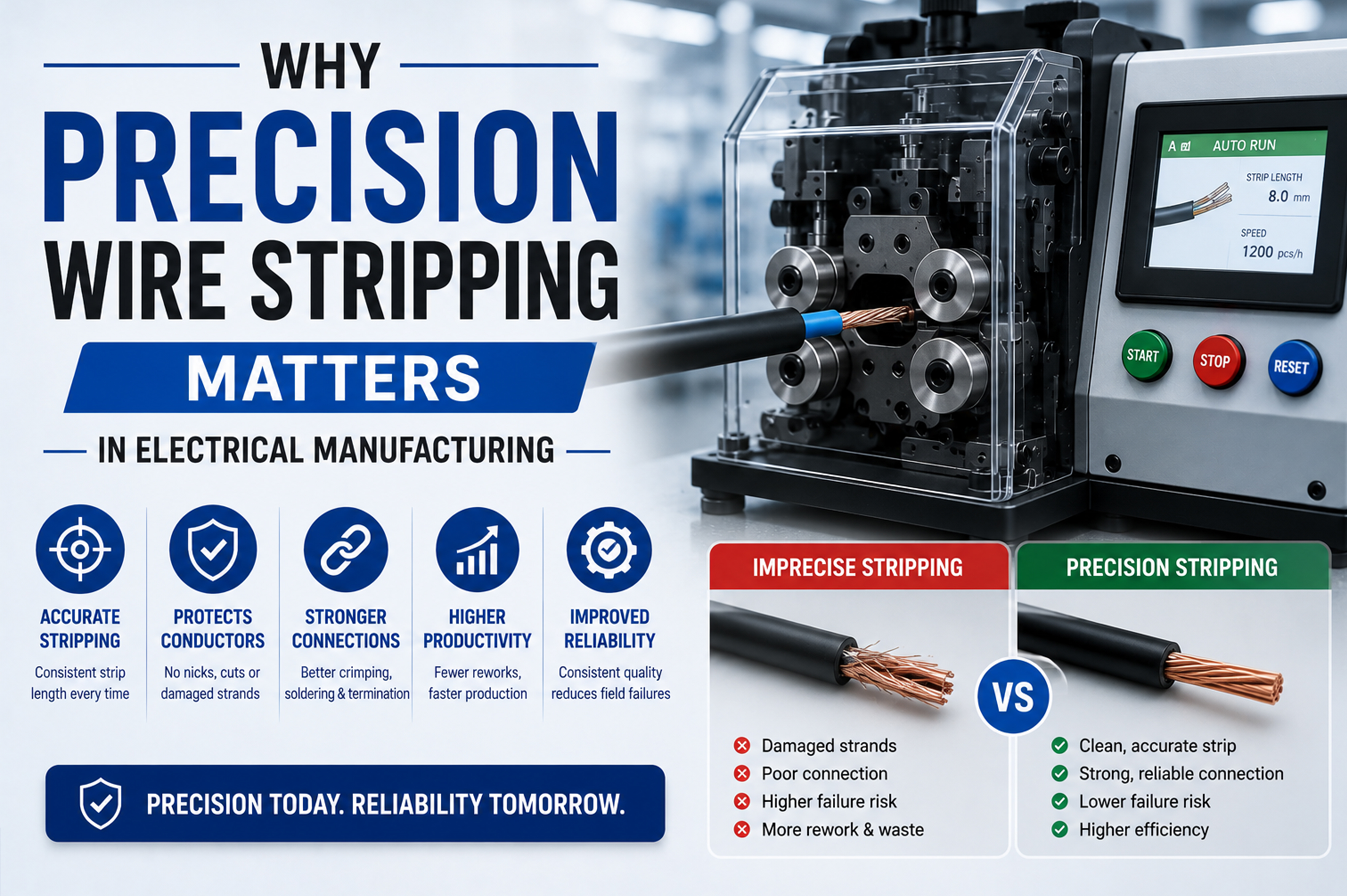
In electrical manufacturing, a single nicked or damaged conductor strand can lead to premature failure, intermittent connectivity, or outright rejection at quality inspection. Precision wire stripping...
Read More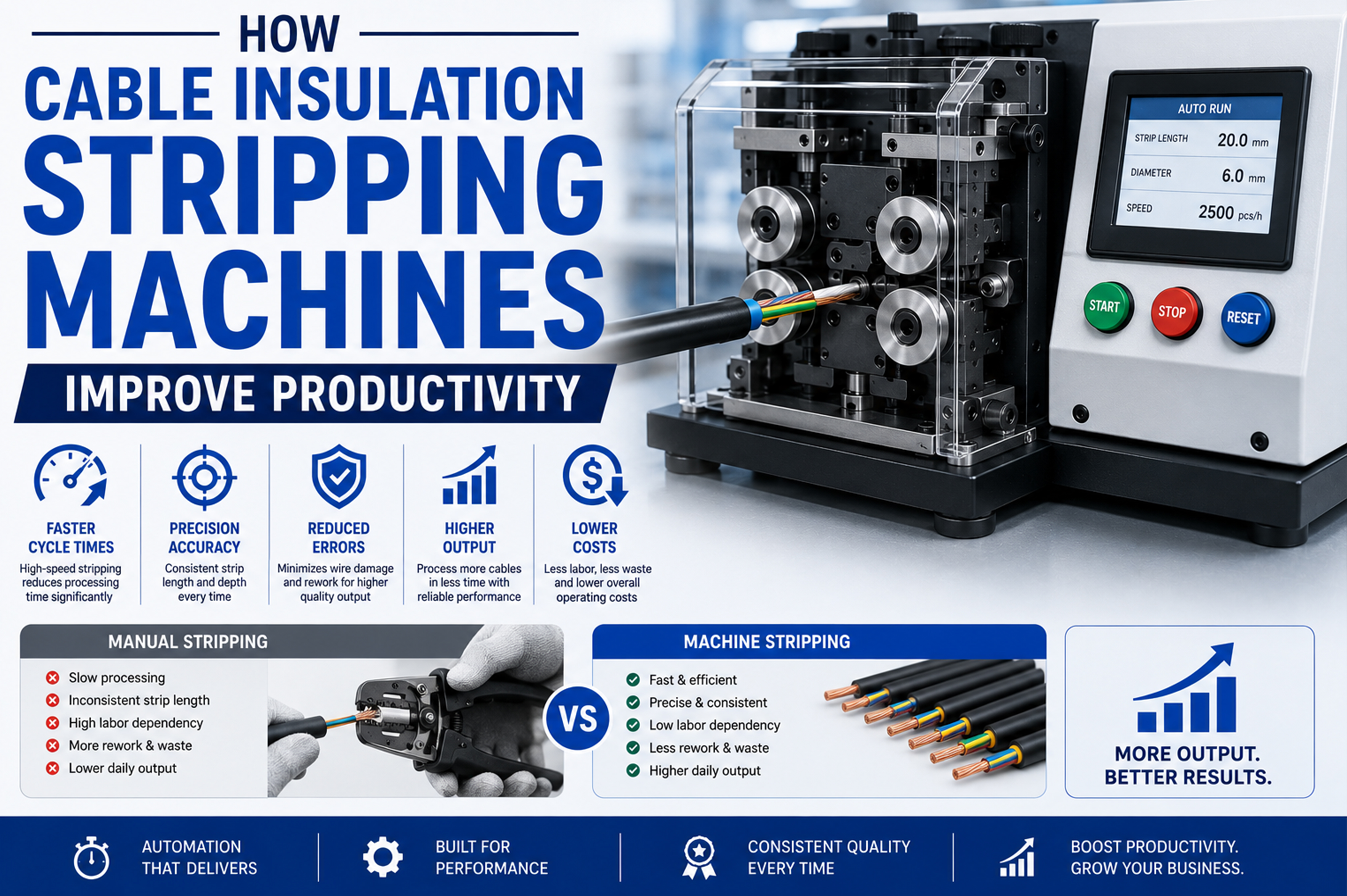
Stripping insulation from cable is one of the highest-frequency operations on a wire processing line, which means even small efficiency gains compound into significant productivity improvements at sca...
Read More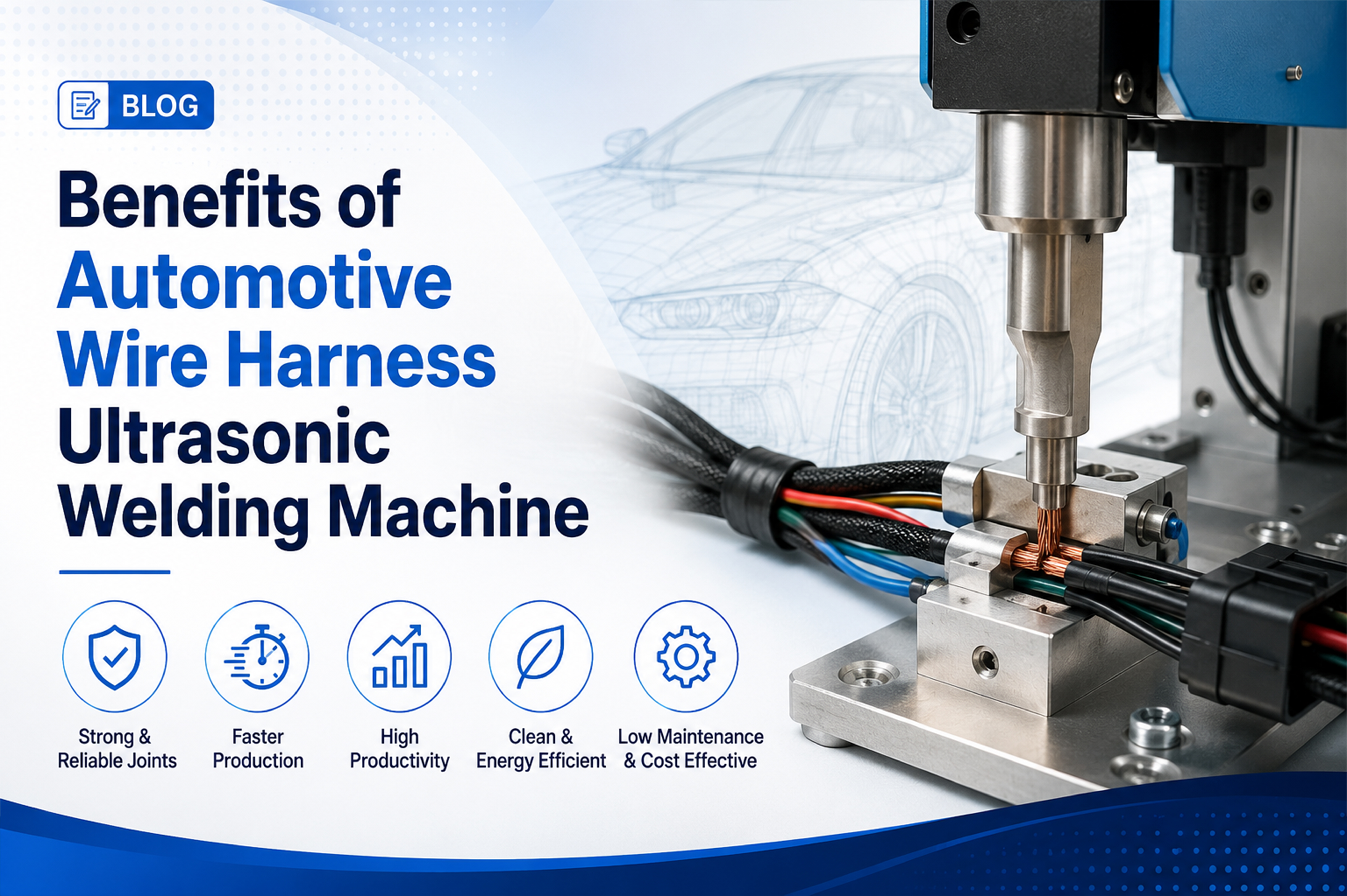
Automotive wire harnesses face a uniquely demanding combination of vibration, thermal cycling, and current load over a vehicle's service life, making connection reliability a critical engineering requ...
Read More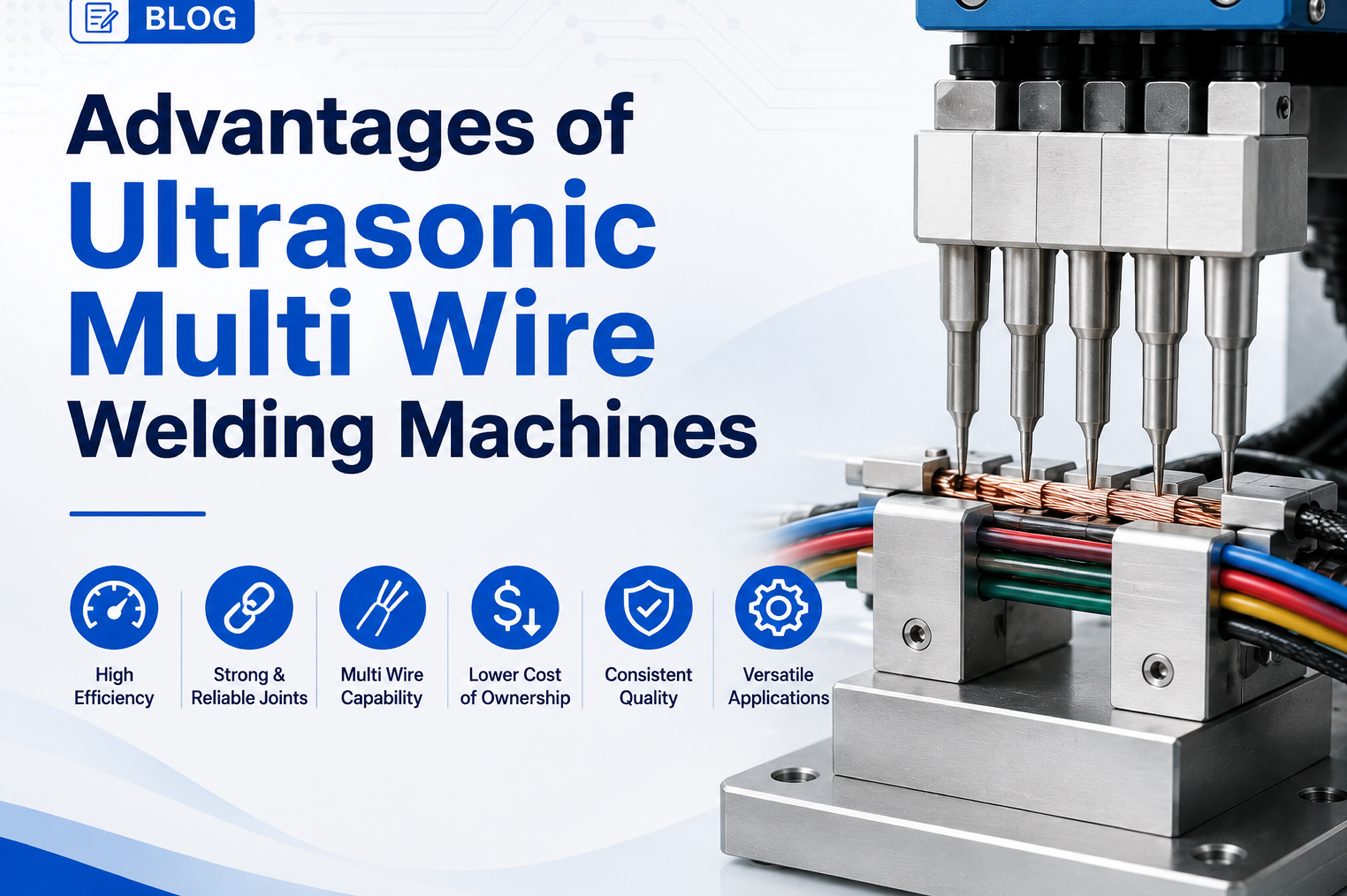
Many wire harness designs require multiple individual wires to be joined into a single splice or terminal connection — a task that traditional crimping handles adequately for small wire counts but str...
Read More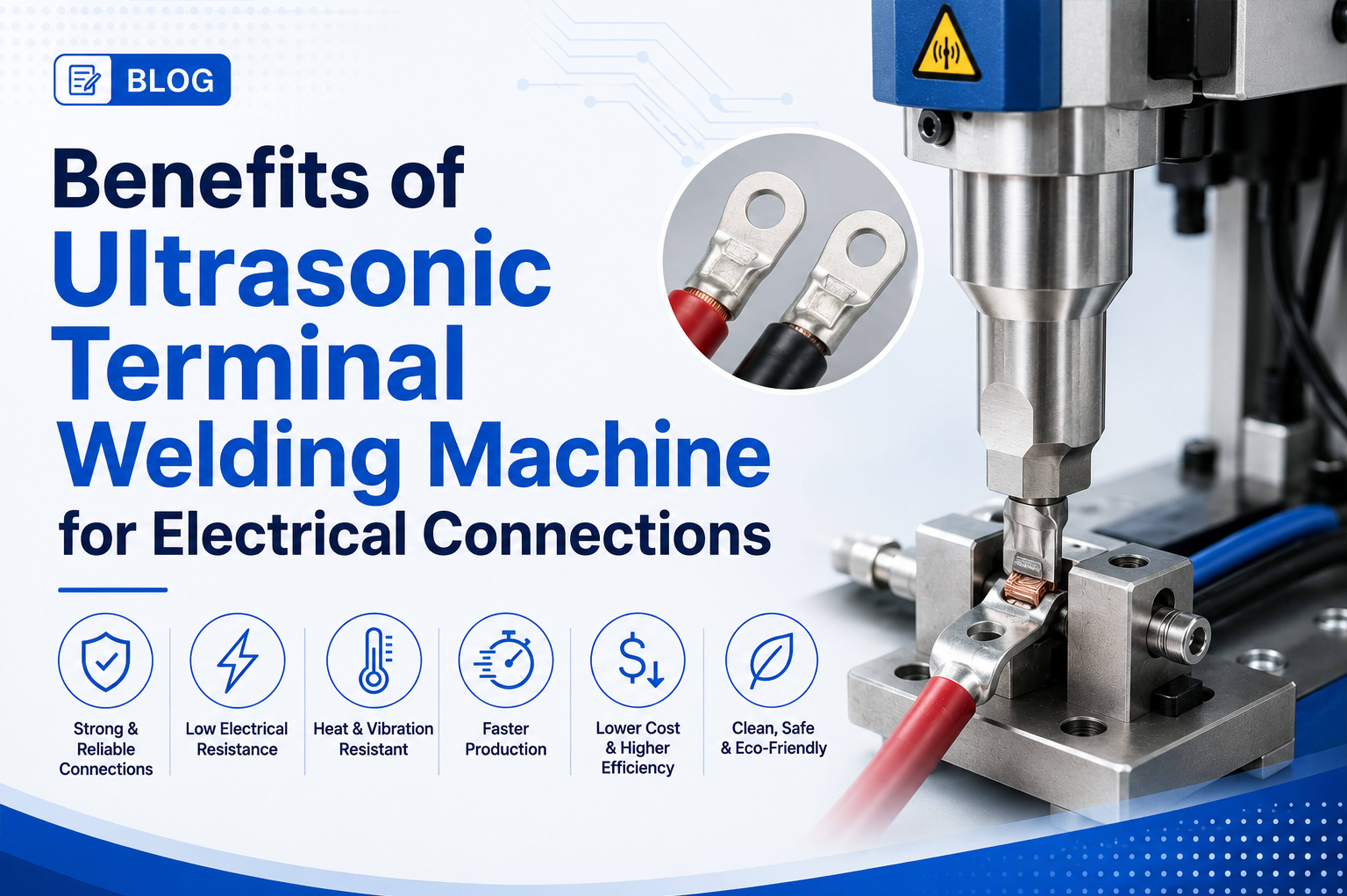
Terminal connections carrying high current loads — such as battery terminals and busbar connections — demand a joining method that delivers both mechanical strength and low electrical resistance, with...
Read More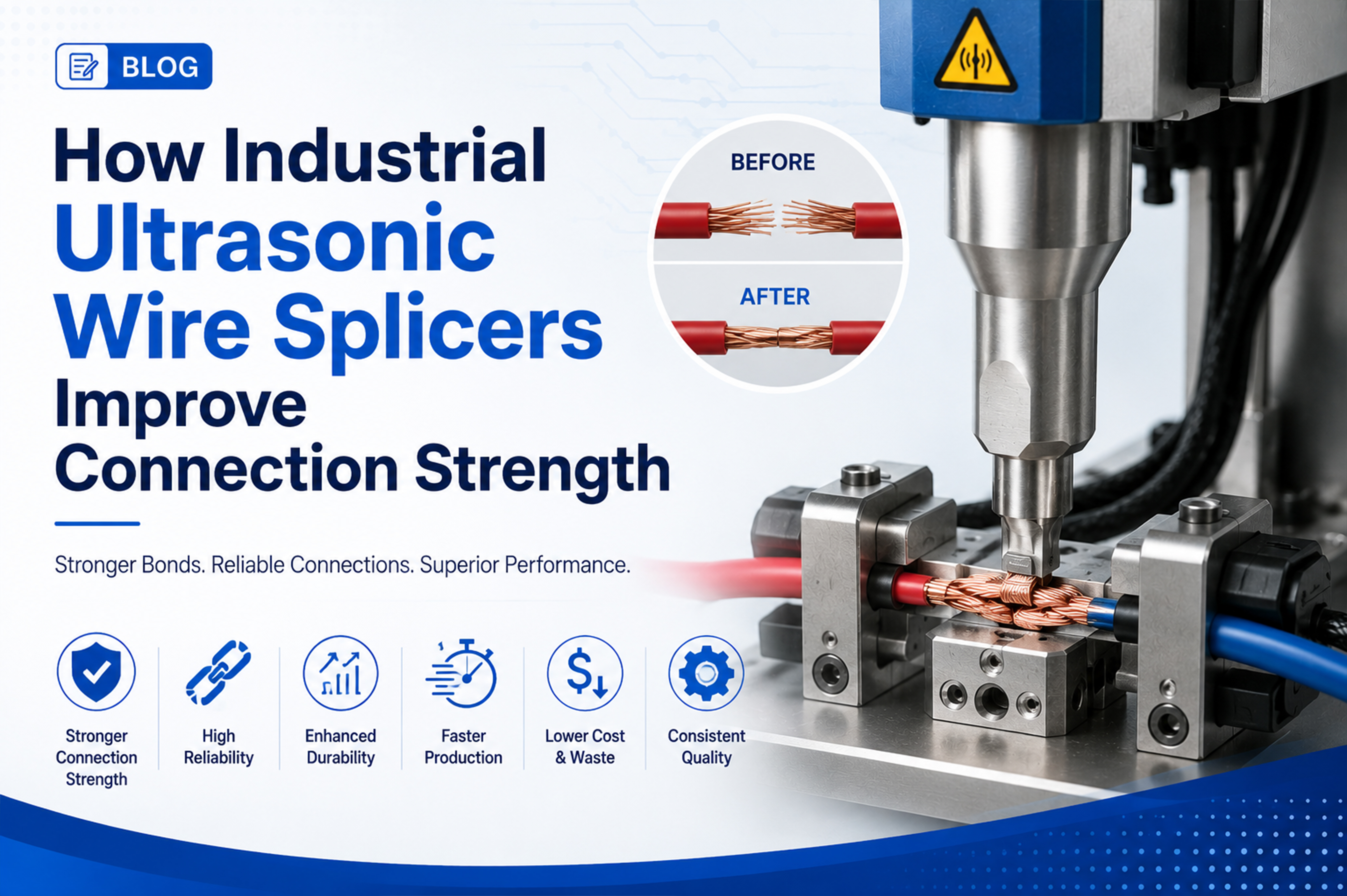
Terminal connections carrying high current loads — such as battery terminals and busbar connections — demand a joining method that delivers both mechanical strength and low electrical resistance, with...
Read More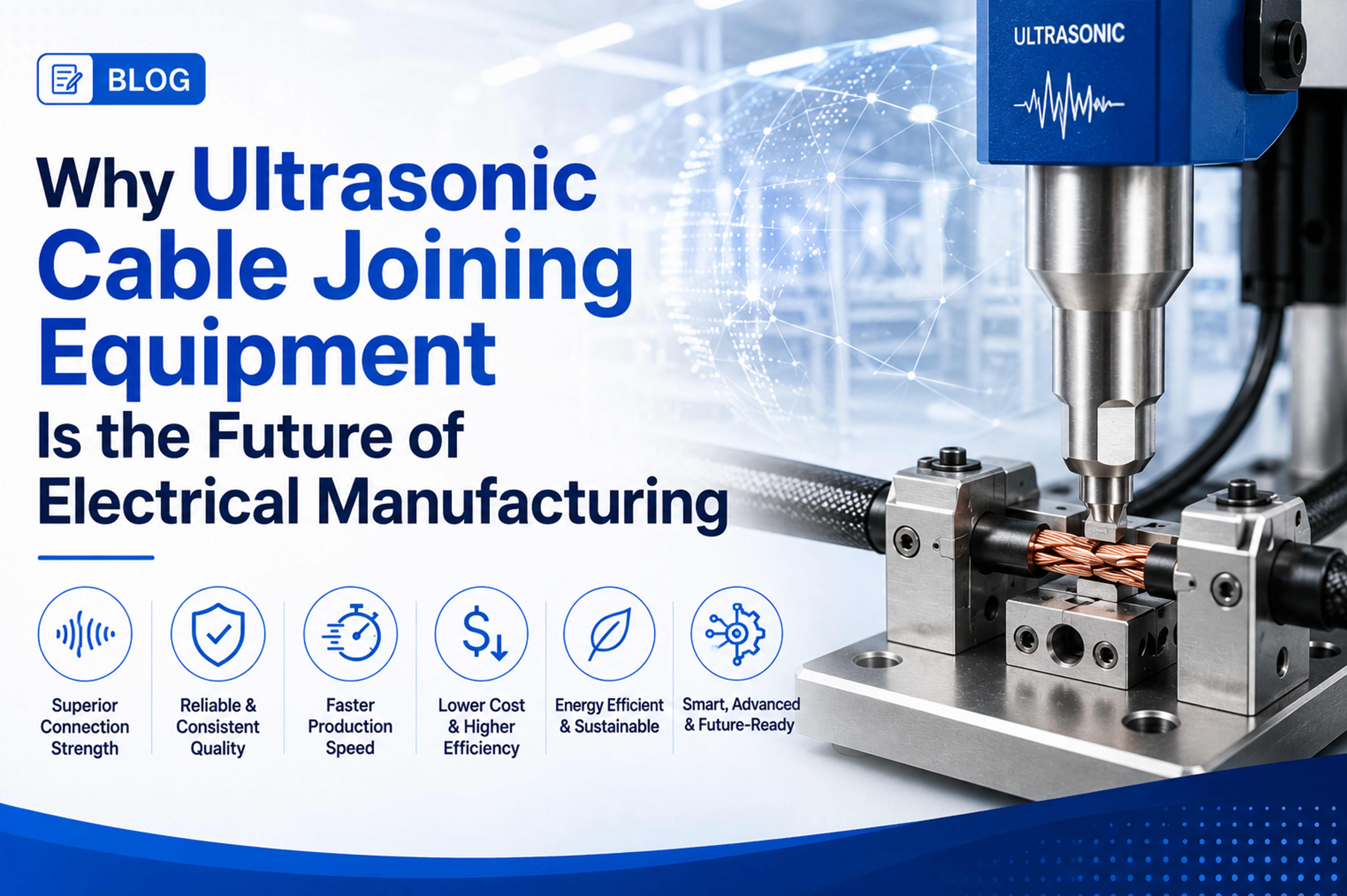
Electrical manufacturing is moving toward higher current loads, lighter weight materials, and stricter reliability requirements — trends that increasingly favour ultrasonic cable joining over traditio...
Read MoreSign up today Writing copy is time-consuming and difficult. Headlime's artificial intelligence can take your thoughts.